

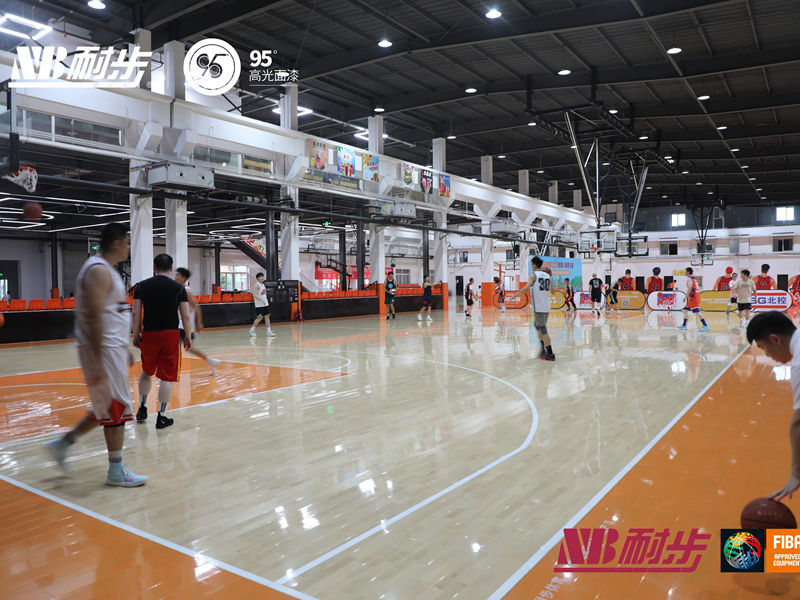
The world of indoor sports has traditionally been dominated by permanent installations. Gymnasiums, arenas, and training centers invest heavily in fixed wooden floors that serve one purpose in one location. But a quiet revolution is underway, driven by portable indoor sports wooden flooring, and it is changing how organizations think about athletic surfaces.
The Problem with Permanent Floors
Permanent sports floors are expensive. A professional-grade maple basketball court can cost tens of thousands of dollars to install, not including the subfloor preparation, climate control systems, and ongoing maintenance. Once installed, the floor is stuck. If a school wants to convert its gym into an exam hall, or a hotel wants to transform a ballroom into a conference room, the floor becomes an obstacle.
This rigidity creates a fundamental mismatch between how spaces are used and how they are designed. Most multipurpose facilities are used for sports only a fraction of the time, yet they carry the cost and inflexibility of a dedicated sports venue.
The Portable Solution
Portable indoor sports wooden flooring solves this mismatch by decoupling the surface from the building. The floor becomes a movable asset rather than a fixed one. This means a single investment can serve multiple venues, multiple sports, and multiple configurations. A school district with ten buildings can share one set of portable courts, rotating them as needed. A sports league can bring its own floor to any venue, ensuring consistent playing conditions everywhere.
Consistency Across Venues
One of the most underappreciated benefits of portable flooring is consistency. When athletes train on different surfaces, their performance can vary. A basketball player accustomed to a certain bounce and friction level may struggle when the surface changes. Portable floors eliminate this variable. The same floor travels with the team, the same bounce, the same grip, every time.
Economic Impact
From an economic perspective, portable flooring dramatically lowers the barrier to entry for sports programs. Small schools, community organizations, and developing regions can now access professional-grade surfaces without the capital expenditure of permanent installation. This democratization of athletic infrastructure has the potential to expand participation in sports at every level.
Environmental Benefits
Portable floors also score well on sustainability. Because they are reusable and relocatable, fewer raw materials are consumed over time compared to installing and removing permanent floors. When a panel reaches the end of its life, the hardwood can be reclaimed or recycled. The modular design means that only damaged sections need replacement, not the entire surface.
The Shift in Thinking
What makes portable indoor sports wooden flooring truly revolutionary is not just the product itself, but the mindset shift it enables. Facility managers are moving from a "build it and forget it" mentality to a "deploy it and optimize it" approach. Sports organizations are thinking in terms of assets they can move rather than infrastructure they are stuck with.
This shift is still in its early stages, but the trajectory is clear. As portable systems continue to improve in quality and decrease in cost, they will become the default choice for any facility that values flexibility alongside performance.
Leave a Reply