

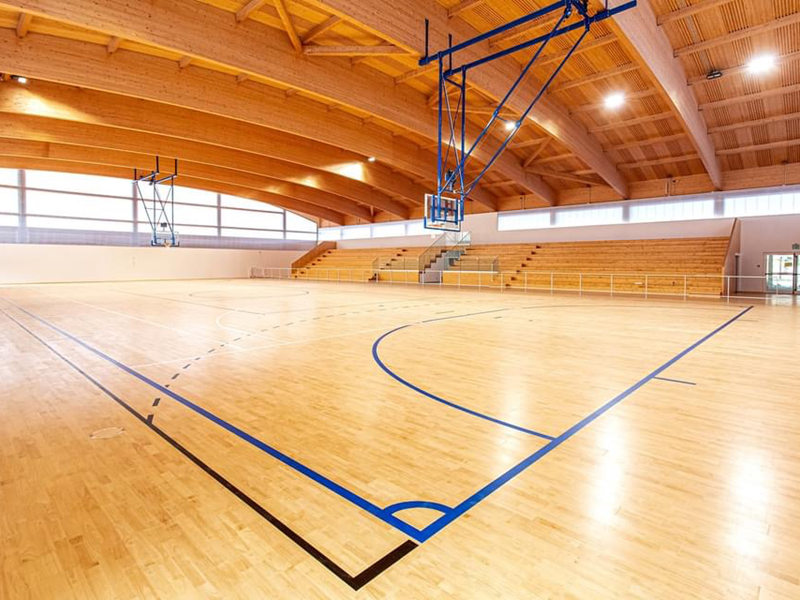
Portable indoor sports wooden flooring has emerged as one of the most practical solutions for facilities that need flexible, high-performance surfaces without permanent construction. Unlike traditional fixed wooden floors, portable systems are designed to be assembled, disassembled, relocated, and stored with relative ease. This guide explores everything you need to know about this flooring category.
What Makes It Portable
The core design philosophy behind portable indoor sports wooden flooring is modularity. Each panel interlocks with adjacent panels through precision-engineered connection systems. These connections are tight enough to prevent movement during play but loose enough to allow quick disassembly. The panels typically sit on adjustable support frames or interlocking subframes that distribute weight evenly across the surface.
Materials Used
Most portable sports wooden floors use hardwood species such as maple, oak, or birch for the top layer. These hardwoods are chosen for their density, shock absorption, and durability. Beneath the hardwood surface, you will often find a multi-layer construction that includes plywood, foam padding, and sometimes fiberglass or polypropylene layers for additional stability. The total thickness usually ranges from 18 millimeters to 22 millimeters, which meets the standards set by most international sports federations.
Who Uses It
Schools, community centers, convention halls, hotel ballrooms, and training facilities are the primary users. Any space that occasionally needs a professional-grade sports surface but cannot justify permanent installation is an ideal candidate. Churches that host basketball tournaments on weekends, corporate event spaces that transform for team-building activities, and military gymnasiums that need to reconfigure quickly all benefit from portable systems.
Installation Time
One of the most impressive aspects of portable indoor sports wooden flooring is the speed of installation. A standard basketball court can be laid by a crew of four to six people in as little as four to eight hours. For smaller setups like badminton or volleyball courts, the time can be even shorter. This is a dramatic improvement over traditional flooring, which requires weeks of subfloor preparation, adhesive application, and curing time.
Performance Standards
Despite being portable, these floors must meet rigorous performance criteria. They need to provide adequate ball bounce, shock absorption to protect athletes' joints, and surface friction that prevents slipping. The DIN standard, EN standards, and ITF (International Tennis Federation) requirements all apply depending on the sport. Reputable portable systems are tested and certified to meet these benchmarks.
Longevity and Reusability
A well-maintained portable indoor sports wooden floor can last for many years. Because the panels are not permanently bonded to a subfloor, they can be sanded and refinished multiple times, just like traditional hardwood. When panels become damaged, individual sections can be replaced without disturbing the entire surface. This repairability significantly extends the useful life of the system.
Storage Considerations
When not in use, the panels can be stacked flat or stored upright depending on the system design. Proper storage in a climate-controlled environment is essential to prevent warping. Most systems come with storage carts or racking solutions that make this process manageable.
In summary, portable indoor sports wooden flooring bridges the gap between professional performance and logistical flexibility. It delivers the look, feel, and function of a permanent sports floor while giving facility managers the freedom to reconfigure their spaces as needed.
Leave a Reply