

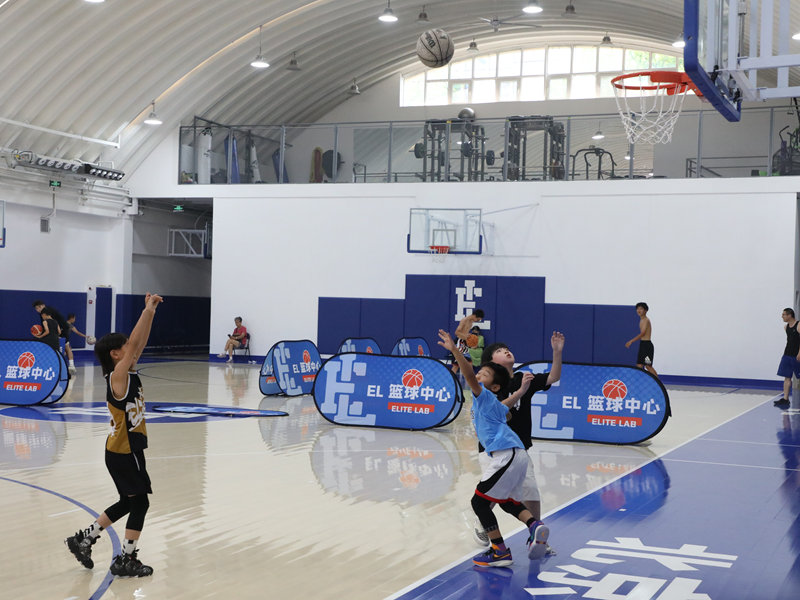
The design of a portable indoor basketball court wooden flooring system extends far beyond the wood surface. Every element — from the panel shape to the substructure to the finish — is an intentional design choice that affects performance, aesthetics, and usability. Understanding these design considerations helps buyers appreciate why systems differ so dramatically in price and quality.
Panel dimensions are a fundamental design choice. Larger panels mean fewer seams, which creates a smoother playing surface and reduces the chance of the ball catching on a gap. However, larger panels are heavier and harder to handle during installation. The industry standard is panels approximately 300mm to 400mm wide and 1,800mm to 2,000mm long. This size balances smoothness with manageability. Some premium systems use extra-wide panels (up to 600mm) for an even more seamless feel.
The tongue-and-groove profile is one of the most important design elements. A deep, precisely milled tongue-and-groove creates a tight connection that minimizes gaps and prevents lateral movement. The depth of the groove (typically 3mm to 5mm) and the angle of the tongue (usually 30 to 45 degrees) determine how secure the connection is. Cheap systems use shallow, loosely milled profiles that gap over time. Premium systems use deep, precision-cut profiles that stay tight for years.
The substructure design determines the court's stability, use of school sports programs, and the ability to store the court during off-seasons or special events maximizes the utility of the gym.
Community centers and recreation facilities face similar multipurpose challenges. A portable court can be set up for a basketball league on weekday evenings and rolled away on weekends to make room for yoga classes, birthday parties, or community meetings. This flexibility is essential for facilities that serve diverse populations with competing needs.
Corporate wellness programs are a growing application. Companies that invest in employee health are installing portable basketball courts in office buildings, warehouses, and convention centers. The court can be set up for lunchtime games, after-work leagues, or corporate team-building events, then stored away when not in use. The relatively low cost compared to a permanent installation makes it an attractive option for corporate budgets.
Event venues and convention centers use portable courts for basketball tournaments, product launches, and interactive exhibitions. The ability to install a professional-looking court in a ballroom or exhibition hall, use it for an event, and then remove it without any damage to the venue floor is invaluable.
Professional and semi-professional training facilities use portable courts as supplemental practice spaces. A team may have one permanent court for games and add portable courts for additional practice time. The portability allows the team to reconfigure the training space as needed.
Residential applications are emerging as a niche market. Homeowners with large basements, garages, or dedicated sports rooms can install a portable court that provides a genuine basketball experience without permanent construction. When the family moves, the court goes with them.
Military and Clean the court regularly to prevent dirt from acting as an abrasive. And inspect the connections every few months to catch problems early.
Leave a Reply