

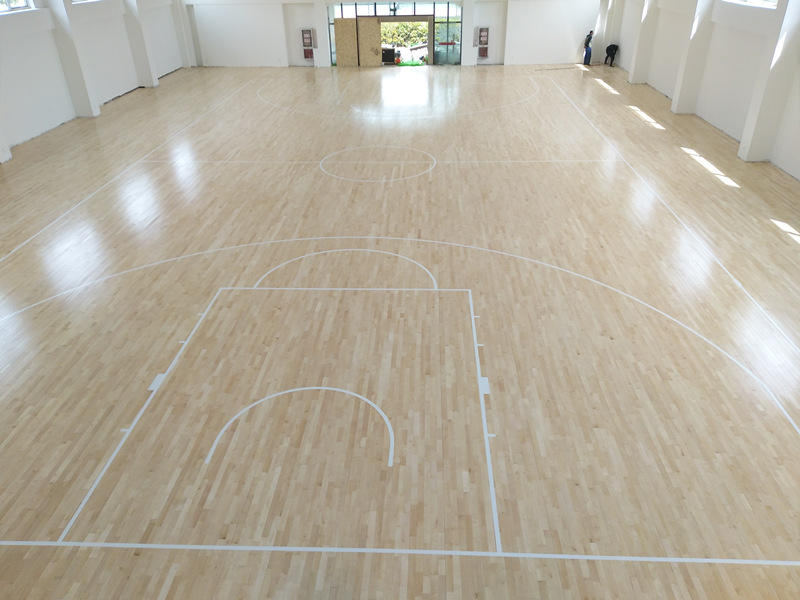
Installing portable indoor sports wooden flooring is a process that rewards preparation and attention to detail. While it is significantly faster than permanent installation, cutting corners can lead to an uneven surface, loose panels, or reduced performance. This step-by-step guide walks you through the entire process.
Step 1: Assess the Space
Before any panels arrive, you need to evaluate the installation area. The surface must be level, clean, and free of debris. Concrete floors are ideal, but properly prepared wooden or existing vinyl floors can also work. Use a long level to check for high and low spots. Any deviation greater than three millimeters over three meters should be addressed before installation begins.
Measure the space carefully. Portable floors are modular, so you will need to calculate how many panels fit and whether any cutting is required. Most systems come with clear layout diagrams, but double-checking measurements prevents costly mistakes.
Step 2: Lay Out the Subframe
The subframe is the skeleton of the portable floor. It consists of interlocking metal or composite frames that support each panel. Begin by placing the corner frames and connecting them according to the manufacturer's instructions. Use a level to ensure each frame is perfectly horizontal. Connect the frames using the provided linking pins or clips.
The subframe must be completely level before any panels are placed. Even a slight tilt will cause panels to shift during play and can create tripping hazards.
Step 3: Place the First Row of Panels
Start from one corner and work systematically across the space. The first panel sets the alignment for everything that follows, so take extra care here. Place the panel onto the subframe and press it down until the connection system engages. You should feel or hear a click as the panel locks into place.
Check the panel with a level in both directions. Adjust if necessary before moving to the next panel.
Step 4: Continue Laying Panels
Proceed row by row, connecting each new panel to the previous ones using the interlocking edges. Most systems use a tongue-and-groove or puzzle-piece connection that guides the panels into alignment automatically. Avoid forcing panels together. If a connection feels tight, check for debris or misalignment rather than pushing harder.
For larger courts, work from the center outward to maintain symmetry. This ensures that any minor cutting required at the edges is distributed evenly on both sides.
Step 5: Handle Edges and Cutouts
When you reach the edges of the space, you will likely need to cut panels to fit. Use a fine-toothed circular saw or jigsaw for clean cuts. Always cut with the finished surface facing up to minimize splintering. Sand the cut edges smooth and apply any recommended sealant.
If the space includes doorways, columns, or other obstacles, plan the layout in advance so that cuts are minimized and structural integrity is maintained around the openings.
Step 6: Final Inspection
Once all panels are in place, walk the entire surface. Check for any loose panels, uneven spots, or gaps. Press down on each panel to confirm it is fully seated. Run a ball across the surface to test bounce consistency. If everything checks out, the floor is ready for use.
Common Mistakes to Avoid
Skipping the leveling step, installing on a dirty surface, forcing connections, and failing to account for expansion gaps are the most common errors. Taking the time to do each step properly ensures a floor that performs well and lasts long.
Leave a Reply