

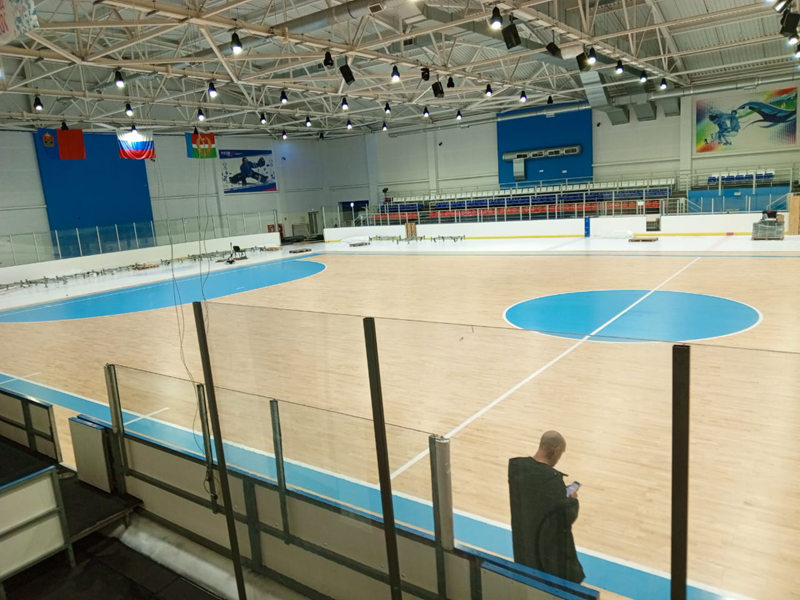
Choosing between portable and permanent indoor sports wooden flooring is one of the most consequential decisions a facility manager can make. Both options deliver excellent performance, but they serve fundamentally different needs. This comparison examines every major factor.
Installation Time and Disruption
Permanent floors require extensive preparation. The subfloor must be inspected, leveled, and often reinforced. Adhesive or mechanical fastening systems take days to apply, and the floor needs curing time before it can be used. Total installation can take two to four weeks for a single court.
Portable floors, by contrast, can be installed in a single day. A full basketball court takes four to eight hours with a trained crew. There is no adhesive, no curing, and no permanent alteration to the building. When the floor is removed, the space is exactly as it was before.
Cost
Permanent floors have a higher upfront cost. Materials, labor, subfloor preparation, and finishing all add up. A professional maple court can cost between fifteen thousand and forty thousand dollars depending on size and finish.
Portable floors range from eight thousand to twenty-five thousand dollars for a comparable court. The lower cost comes from the modular design, which reduces labor and eliminates subfloor work. However, portable floors may require periodic refinishing, which adds to long-term costs.
Performance
This is where the comparison gets nuanced. High-end portable floors can match the performance of permanent floors in ball bounce, shock absorption, and surface friction. Both can meet DIN, EN, and ITF standards. The difference is often imperceptible to players.
However, permanent floors have a slight edge in long-term consistency. Because they are bonded to the subfloor, there is zero movement. Portable floors, even well-installed ones, can develop slight shifts over time if the subframe is not perfectly level or if connections loosen.
Flexibility
This is the decisive advantage of portable floors. They can be moved to a different room, a different building, or a different city. They can be reconfigured from a basketball court to a volleyball court by changing the layout. Permanent floors cannot do any of this.
For facilities that host multiple events or need to repurpose their space, portable flooring is not just convenient, it is essential.
Maintenance
Both types require regular maintenance: sweeping, mopping, and periodic refinishing. Permanent floors may need more attention to the subfloor, especially in humid environments where moisture can seep up from below. Portable floors are elevated on a subframe, which provides better air circulation underneath and reduces moisture-related issues.
Refinishing a permanent floor means sanding the entire surface in place. Refinishing a portable floor means removing panels, sanding them individually, and reinstalling them. The process is more labor-intensive but allows for targeted repairs.
Lifespan
A permanent floor, properly maintained, can last thirty to fifty years. A portable floor typically lasts fifteen to twenty-five years, depending on usage and care. The modular design of portable floors means individual panels can be replaced, extending the system's life beyond what a single permanent floor might achieve in a high-traffic environment.
The Verdict
If your facility is dedicated to sports and will not change its use, a permanent floor offers the best long-term value. If your space is multipurpose, if you need to move the floor, or if you want to avoid the disruption and cost of permanent installation, portable indoor sports wooden flooring is the superior choice.
Leave a Reply