

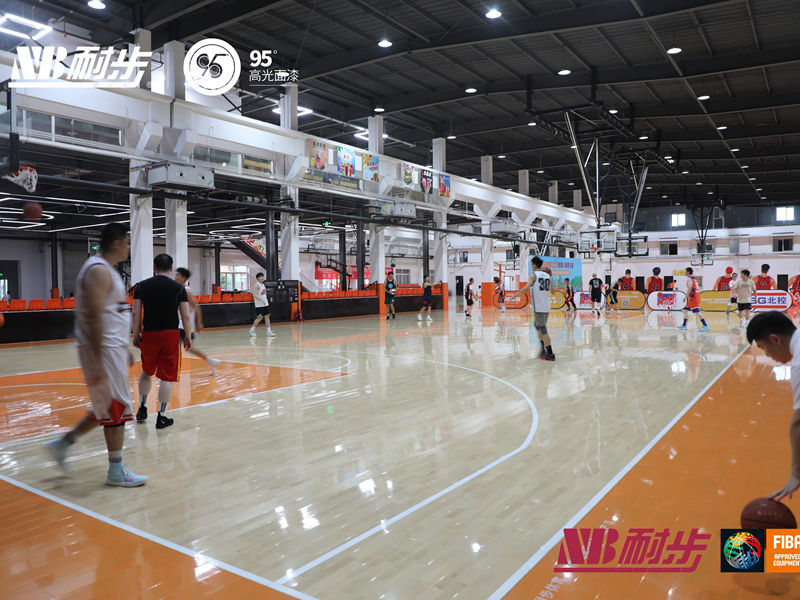
The basketball court flooring industry is undergoing a quiet revolution. For decades, the standard was simple: you built a permanent court with hardwood installed directly over a concrete or plywood subfloor, and that was that. The court stayed where it was, and if you wanted basketball anywhere else, you were out of luck. That paradigm is shifting rapidly, and portable basketball court wood flooring is leading the charge.
Several converging trends are driving this shift. First, the rise of multi-use sports facilities. Schools, community centers, and even corporate campuses no longer want a single-purpose room sitting empty most of the day. They want a space that can host basketball in the morning, a volleyball tournament in the afternoon, and a community event in the evening. Portable wood flooring makes this possible without the permanent construction costs.
Second, the growth of youth and amateur basketball has created demand for courts in places that never had them before. Parks, parking lots, and even rooftops are being converted into playing surfaces. Portable flooring is the only practical solution for these locations because permanent installation is either impossible or prohibited by lease agreements.
Third, the improving quality of portable systems has erased most of the performance gap between portable and permanent courts. Ten years ago, portable flooring was noticeably inferior in terms of ball bounce, shock absorption, and feel. Today, high-end portable systems deliver performance that is virtually indistinguishable from permanent hardwood, even under competitive conditions.
The economic argument is also compelling. A permanent hardwood basketball court can cost anywhere from thirty thousand to over a hundred thousand dollars depending on size and finish. A comparable portable system might cost forty to sixty percent of that, and it can be reused across multiple locations. For organizations with limited budgets, the math is clear.
Logistics are another major advantage. Portable flooring can be stored in a standard shipping container or even a large truck. Setup times for a full-size court range from four to eight hours with a crew of four to six people. Teardown is equally fast. This means a single portable court can serve multiple venues over the course of a season, dramatically increasing its utilization rate.
The environmental argument should not be overlooked either. Because portable floors are reused rather than permanently installed, the overall material consumption is lower. When a portable floor reaches the end of its life, the wood can often be recycled or repurposed, whereas a permanent floor is typically demolished and sent to a landfill.
Of course, portable flooring is not a perfect solution for every situation. For elite-level professional teams or facilities that host daily competitive play, a permanent court with custom-finished hardwood is still the gold standard. But for the vast majority of basketball users, portable wood flooring now offers the best combination of performance, flexibility, and value.
The market data supports this conclusion. Industry reports show that portable basketball court flooring sales have grown at a compound annual rate of over eight percent in recent years, while permanent court construction has remained relatively flat. The trajectory is clear: portable is no longer the alternative. It is the mainstream.
Leave a Reply