

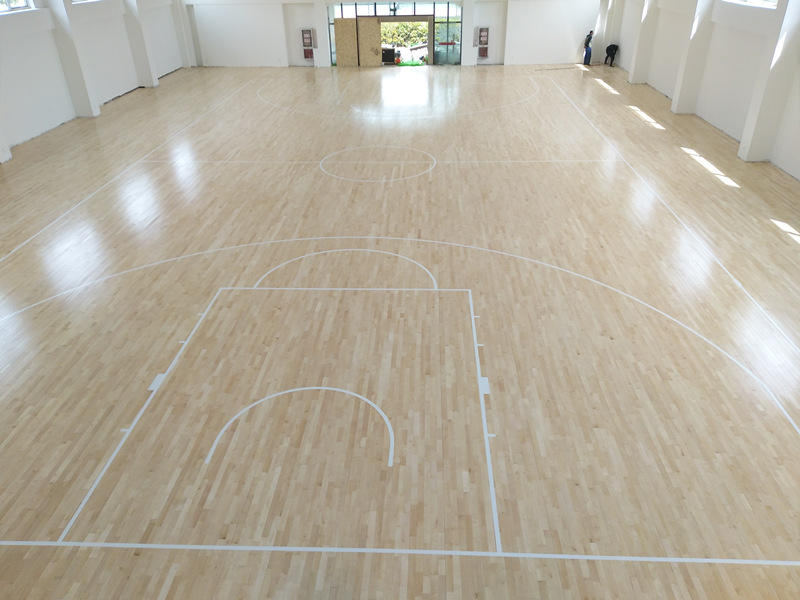
Athletes demand the best from their equipment, and the surface they play on is no exception. Indoor sports wooden flooring has earned its reputation as the superior choice for competitive and recreational athletes alike. But what exactly makes it better than alternatives like concrete, rubber, or synthetic surfaces? The answer lies in a combination of biomechanics, physics, and material science.
The first and most significant advantage is shock absorption. When an athlete lands from a jump, runs at full speed, or makes a sharp cut, the impact forces can be several times their body weight. On a hard surface like concrete, these forces are transmitted directly through the legs, ankles, knees, and spine. Over time, this leads to stress fractures, tendonitis, and joint degeneration. Indoor sports wooden flooring, with its engineered elastic layer, absorbs a significant portion of these forces. Studies have shown that properly installed sports wood floors can reduce impact forces by 30 to 50 percent compared to rigid surfaces. This translates directly into fewer injuries and longer athletic careers.
The second advantage is ball rebound consistency. In sports like basketball, volleyball, and handball, the way the ball bounces off the floor is critical to gameplay. A surface that is too soft will absorb too much energy, making the ball feel dead. A surface that is too hard will return too much energy, making the ball unpredictable and dangerous. Indoor sports wooden flooring is engineered to achieve a ball rebound rate within a narrow, standardized range. This consistency allows athletes to develop muscle memory and play with confidence.
The third advantage is traction and grip. Athletes need a surface that allows them to push off explosively, stop quickly, and change direction without slipping. Wood floors with proper finishes provide an ideal coefficient of friction. They are not so grippy that they cause knee torque, but not so slippery that they cause falls. This balance is extremely difficult to achieve with synthetic surfaces, which often become dangerously slippery when wet or dusty.
A fourth advantage is the psychological effect. There is something about playing on real wood that feels different from playing on any other surface. The warmth, the sound, the slight give underfoot, all contribute to a sense of quality and professionalism. Athletes perform better when they feel confident in their environment, and a wood floor communicates that the facility takes their sport seriously.
Temperature regulation is another benefit. Unlike concrete, which can be cold and damp, wood is a natural insulator. It stays closer to ambient temperature, which is more comfortable for athletes and reduces the risk of muscle strains caused by cold surfaces. In facilities without climate control, this difference can be significant.
Durability is also a major factor. A well-maintained indoor sports wooden floor can last 30 to 50 years or more. During that time, it can be sanded and recoated multiple times, essentially renewing its performance characteristics. Compare this to rubber or synthetic surfaces, which degrade over time and must be replaced entirely every 8 to 15 years. Over the lifetime of a facility, wood flooring is often the more cost-effective option.
Finally, indoor sports wooden flooring is environmentally friendly. Wood is a renewable resource, and modern manufacturing practices ensure that forests are managed sustainably. At the end of its life, wood can be recycled or repurposed, unlike synthetic materials that often end up in landfills.
For all these reasons, indoor sports wooden flooring is not just a luxury. It is a performance-enhancing, injury-preventing, and environmentally responsible choice that every serious athletic facility should consider.
Leave a Reply