

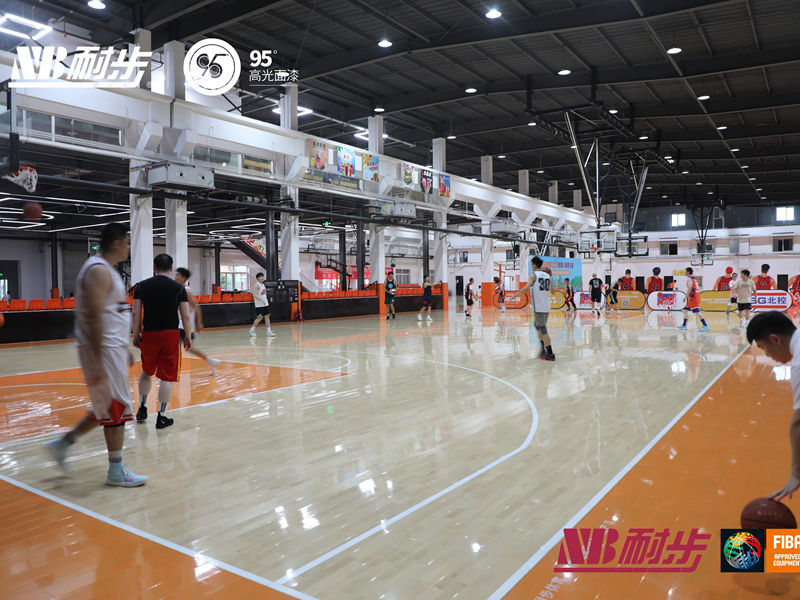
When people think of indoor sports wooden flooring, they often imagine a single product. In reality, there are several distinct types, each designed for specific sports, performance requirements, and budget ranges. Understanding these differences is essential for making the right choice for your facility.
The first and most common type is the solid hardwood sports floor. This consists of a single piece of hardwood, typically maple, installed directly over a subfloor with elastic pads. Solid hardwood floors offer the best ball rebound and feel the most natural underfoot. They are the preferred choice for professional basketball courts, volleyball arenas, and elite training facilities. The downside is that they are the most expensive option and require the most careful installation and maintenance.
The second type is the engineered wood sports floor. This is constructed from multiple layers of wood, with a thin top layer of hardwood bonded to a core of plywood or high-density fiberboard. Engineered floors are more dimensionally stable than solid hardwood, meaning they are less likely to warp or cup in changing humidity conditions. They are also generally more affordable and can be installed over a wider range of subfloor types. For most recreational and mid-level competitive facilities, engineered wood is the ideal balance of performance and cost.
A third category is the parquet sports floor. These are made from small blocks of hardwood, typically 70 by 20 millimeters or similar dimensions, arranged in geometric patterns. Parquet floors are extremely durable because the small blocks distribute stress more evenly across the surface. They are commonly used in multi-purpose halls where the floor must accommodate several different sports. The modular nature of parquet also makes it easier to repair, as individual blocks can be replaced without disturbing the entire floor.
There is also the panel system floor, which comes in pre-manufactured panels that are quickly assembled on site. These panels include the hardwood surface, the elastic layer, and sometimes even the subframe, all integrated into a single unit. Panel systems are popular for facilities that need fast installation or have tight construction schedules. They offer consistent quality because each panel is factory-controlled, but they can be less flexible in terms of customization.
Another important distinction is between floating floor systems and fixed floor systems. A floating floor is not glued or nailed to the subfloor. Instead, it rests on top of the subfloor and is held in place by its own weight and friction. This allows the floor to expand and contract with humidity changes, reducing the risk of buckling. Fixed floors are permanently bonded to the subfloor, which provides a more rigid and stable playing surface but requires more precise installation.
The thickness of the top layer also varies. For high-performance applications, a 22 to 26 millimeter top layer is standard. For lighter use, such as in dance studios or fitness centers, a 18 to 20 millimeter layer may be sufficient. Thicker tops last longer and can be sanded and recoated more times, extending the floor's useful life.
Finally, the finish system plays a major role in defining the floor type. Water-based polyurethane finishes are the most common today because they are low in volatile organic compounds and provide excellent durability. Oil-based finishes are less common but offer a warmer appearance and a slightly different feel underfoot. The number of coat layers, typically between five and ten, also affects performance, durability, and maintenance requirements.
Choosing the right type of indoor sports wooden flooring depends on your specific needs. Consider the primary sport, the level of competition, the expected traffic, your budget, and your maintenance capacity. Each type has its strengths, and the best choice is the one that aligns with your facility's goals.
Leave a Reply