

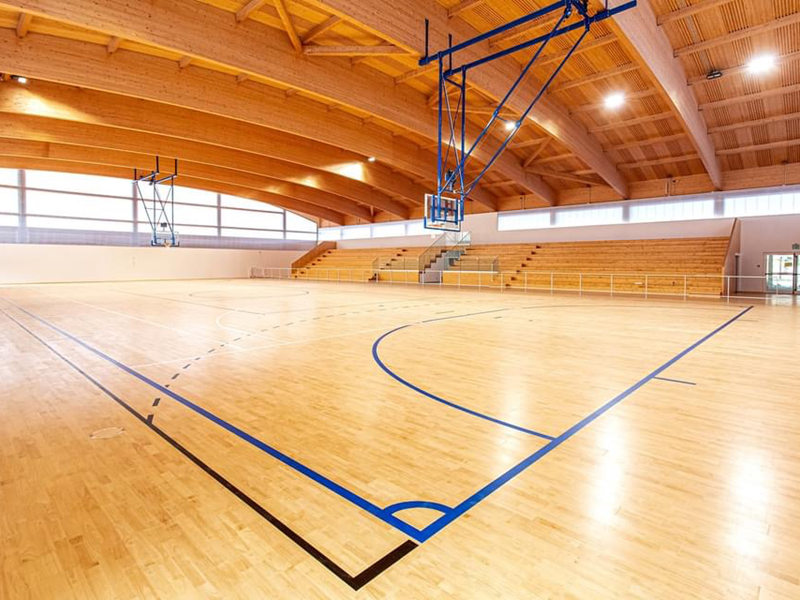
Indoor sports wooden flooring has become the gold standard for athletic facilities around the world. Whether you are building a new gymnasium, renovating an existing sports hall, or designing a multi-purpose recreational center, the type of flooring you choose will directly impact performance, safety, and longevity. This comprehensive guide explores everything you need to know about indoor sports wooden flooring, from its basic composition to its most advanced performance features.
At its core, indoor sports wooden flooring is a engineered system designed specifically for athletic use. Unlike residential hardwood, which is built for aesthetics and light foot traffic, sports flooring must withstand intense impacts, constant friction, and rapid changes in direction. The material is typically constructed from multiple layers of wood, including a top wear layer made from hard species like maple, oak, or ash. These hardwoods are selected for their density, grain structure, and ability to resist denting and scratching under heavy athletic loads.
The structure of a typical sports wood floor begins with a subfloor, which provides the foundational support. Above the subfloor sits a layer of elastic pads or shock-absorbing materials, which are critical for reducing impact forces on athletes' joints. The middle layer consists of cross-laid plywood or high-density fiberboard, which gives the floor its dimensional stability. Finally, the top layer is the hardwood surface, usually between 20 and 26 millimeters thick, finished with specialized sports coatings.
One of the most important performance metrics for indoor sports wooden flooring is the ball rebound rate. For sports like basketball and handball, the floor must return a consistent percentage of the ball's energy upon impact. International standards typically require a ball rebound rate between 90 and 96 percent. This ensures that the game is played fairly and that athletes can rely on predictable ball behavior.
Another critical factor is shock absorption. The floor must reduce the force transmitted to an athlete's body when they land from a jump or make a sudden stop. A good sports floor will achieve a vertical deformation of between 2.3 and 5.3 millimeters under load, depending on the sport. This range helps prevent stress fractures, joint injuries, and chronic conditions like shin splints.
Slip resistance is equally important. Athletes are constantly accelerating, decelerating, and changing direction. If the floor is too slippery, the risk of ankle sprains, knee injuries, and other accidents increases dramatically. Sports wood floors are finished with specialized anti-slip coatings that maintain grip even when the surface is slightly damp from sweat.
The installation process for indoor sports wooden flooring is highly technical and should never be attempted by amateurs. It requires precise leveling of the subfloor, careful acclimatization of the wood to the local climate, and expert knowledge of expansion and contraction patterns. Improper installation can lead to warping, buckling, gaps, and premature failure.
Maintenance is also a key consideration. While sports wood floors are durable, they require regular care to maintain performance. This includes daily sweeping, periodic damp mopping with pH-neutral cleaners, and regular recoating every few years depending on traffic volume. The finish protects the wood from moisture, dirt, and wear, and must be kept in good condition at all times.
In summary, indoor sports wooden flooring is a sophisticated system that combines natural materials with advanced engineering. When properly selected, installed, and maintained, it provides a safe, high-performance surface that enhances athletic performance and protects the health of players. It is an investment that pays dividends in terms of player safety, facility reputation, and long-term cost efficiency.
Leave a Reply