

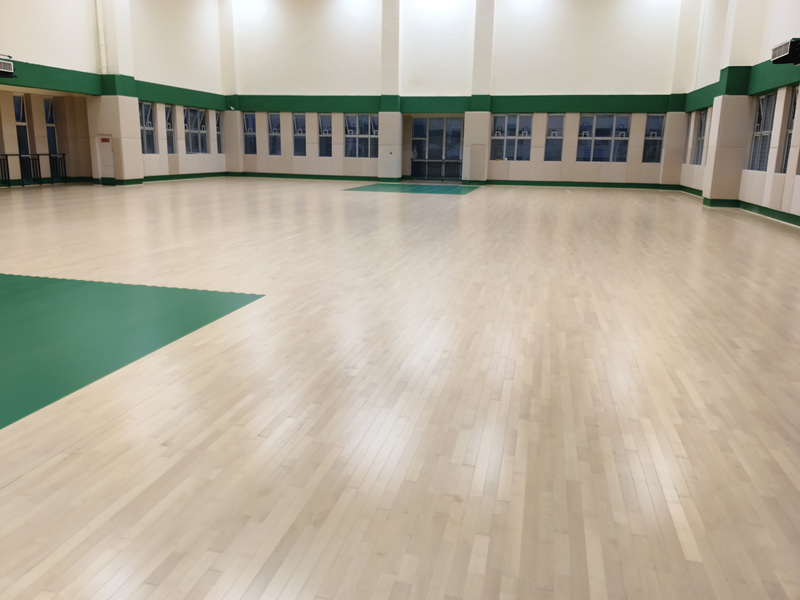
The history of indoor basketball court flooring is a fascinating story of innovation, driven by the evolving needs of the game. From humble beginnings on rough concrete surfaces to the polished hardwood courts we see today, the journey has been shaped by advances in materials science, construction techniques, and our understanding of player performance.
In the early days of basketball, the game was played on whatever surface was available. Indoor courts were often made of concrete or wood planks laid directly over a dirt or gravel subfloor. These surfaces were hard, unforgiving, and provided terrible shock absorption. Players were injured frequently, and the ball bounce was inconsistent. But basketball was a new game, and nobody yet understood what the ideal playing surface should be.
The first major improvement came in the 1920s and 1930s, when wooden plank floors began to appear in gymnasiums. These were simple floors made of narrow wood strips nailed directly to joists. They were a significant improvement over concrete, providing better shock absorption and a more consistent ball bounce. But they were still far from ideal. The planks were uneven, the finish was primitive, and the floors required constant maintenance.
The real revolution came in the 1950s and 1960s, with the introduction of parquet flooring. Parquet floors were made of small wood blocks arranged in a pattern, typically a herringbone or basketweave design. These floors were more stable than plank floors because the small blocks were less prone to warping. They also provided excellent ball response and became the standard for professional basketball.
The next major leap came in the 1970s and 1980s, with the development of engineered wood flooring. Unlike solid wood planks, engineered flooring is made of multiple layers of wood, with a hardwood top layer bonded to a plywood or softwood core. This construction made the floor more stable, more resistant to moisture, and easier to install. It also allowed for thinner profiles, which reduced the overall height of the floor system.
In the 1990s and 2000s, the focus shifted to performance optimization. Manufacturers began to engineer floors specifically for basketball, with precise specifications for shock absorption, ball response, and traction. The finish technology also advanced, with water-based finishes replacing solvent-based products for environmental and health reasons.
Today, indoor basketball court wood flooring is a highly refined product. The floors are engineered to exacting standards, installed by specialized contractors, and maintained using scientifically developed protocols. The evolution from concrete to hardwood is not just a story of better materials; it is a story of better understanding of what athletes need to perform at their best.
Leave a Reply