

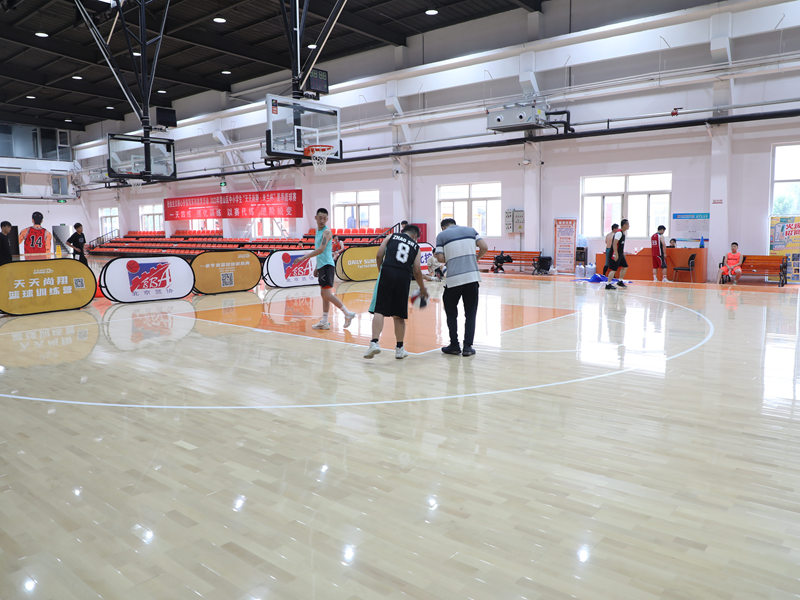
Wood is a natural material, and like all natural materials, it responds to its environment. Temperature and humidity are the two most significant environmental factors that affect indoor basketball court wood flooring, and understanding their impact is essential for maintaining a high-performing court.
Humidity is the single biggest environmental concern for wood flooring. Wood absorbs and releases moisture in response to changes in relative humidity. When the humidity is high, the wood absorbs moisture and expands. When the humidity is low, the wood releases moisture and contracts. This expansion and contraction can cause a range of problems, including cupping (where the edges of the planks rise higher than the center), crowning (where the center rises higher than the edges), gapping (where gaps open up between planks), and buckling (where the floor pushes up in waves).
For indoor basketball courts, the ideal relative humidity range is between 35 and 55 percent. This range keeps the wood stable and minimizes expansion and contraction. Facilities in humid climates, such as those in tropical or coastal regions, need to invest in dehumidification systems to maintain this range. Facilities in dry climates, such as those in arid regions, may need humidifiers to prevent the wood from drying out too much.
Temperature also plays a role, though it is less significant than humidity. High temperatures can accelerate the drying of the finish, causing it to become brittle and crack. Low temperatures can make the finish less flexible, which can affect ball response. The ideal temperature range for a basketball court is between 18 and 24 degrees Celsius.
Seasonal changes are particularly challenging. In many regions, humidity levels fluctuate significantly between summer and winter. During the winter, when heating systems are running, the air inside the facility can become very dry, causing the wood to shrink. During the summer, when air conditioning is running, the air can become too dry as well. The best defense against seasonal fluctuations is a climate control system that maintains consistent temperature and humidity year-round.
Direct sunlight is another factor to consider. If the facility has large windows that allow sunlight to hit the floor, the wood can fade and the finish can degrade. UV-filtering window film can help mitigate this problem.
In facilities where climate control is not possible or practical, the choice of wood species becomes even more important. Harder species like maple are more dimensionally stable than softer species like birch, meaning they are less affected by changes in humidity. A well-sealed finish also helps protect the wood from moisture fluctuations.
The bottom line is this: climate control is not optional for indoor basketball court wood flooring. It is a necessity. Without it, even the best-installed floor will deteriorate over time. Budget for climate control as part of your overall court project, and your floor will thank you for decades to come.
Leave a Reply