

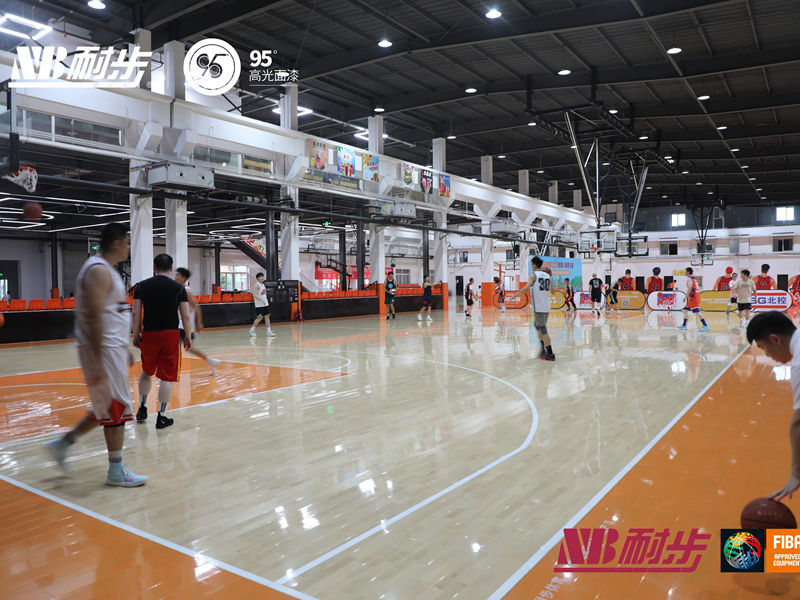
When it comes to indoor athletic facilities, there are many flooring options available. You can choose from synthetic surfaces, rubber tiles, vinyl rolls, polished concrete, and of course, wood. Yet despite the growing variety of alternatives, indoor sports wood flooring remains the gold standard — and for good reason.
The primary reason wood flooring dominates the sports world is performance. Athletes need a surface that responds predictably. When a basketball bounces, a volleyball is set, or a badminton shuttlecock lands, the floor must deliver consistent, reliable feedback. Wood provides this in a way that no synthetic material has been able to fully replicate. The cellular structure of hardwood gives it natural shock absorption, while its density ensures uniform energy return. This means the ball behaves the same way whether it hits the center of the court or near the baseline.
Injury prevention is the second major advantage. Studies have consistently shown that athletes playing on properly installed sports wood floors experience fewer joint injuries, particularly to the knees, ankles, and lower back. This is because wood has a natural give — it flexes slightly under impact, absorbing some of the force that would otherwise be transmitted directly into the athlete's body. Synthetic surfaces, by contrast, tend to be either too hard (concrete) or too soft (some rubber systems), both of which can increase injury risk.
Durability is the third pillar. Indoor sports wood flooring is engineered to handle thousands of hours of play per year. In professional arenas, courts may be used for games, practices, warm-ups, concerts, and other events on a near-daily basis. A quality sports wood floor can endure this level of use for decades with proper maintenance. When the surface eventually shows wear, it can be sanded and refinished — restoring it to near-new condition without replacing the entire floor. This refinishing capability is unique to wood and represents a massive long-term cost saving.
Aesthetics also play a role that should not be underestimated. There is something inherently premium about a wooden sports court. It elevates the perception of the facility, attracts higher-level events, and creates a better experience for fans. The visual appeal of wood is timeless and universally recognized as a mark of quality.
Finally, there is the environmental dimension. Wood is a renewable resource. When sourced from responsibly managed forests, sports wood flooring has a lower carbon footprint than many synthetic alternatives. At the end of its life, wood can be recycled or repurposed, whereas many synthetic floors end up in landfills.
For all these reasons — performance, safety, durability, aesthetics, and sustainability — indoor sports wood flooring earns its reputation as the gold standard. It is not the cheapest option upfront, but it is almost always the best option overall.
Leave a Reply