

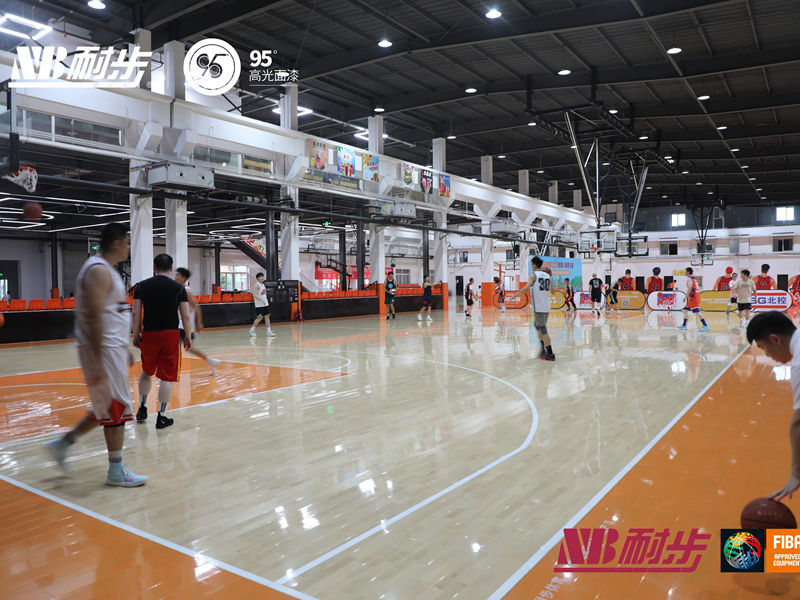
In a world full of synthetic alternatives, hardwood flooring continues to dominate indoor basketball courts across the globe. From the NBA to local recreation centers, hardwood is the surface of choice. But why? What is it about real wood that keeps it at the top after all these years?
The answer lies in a combination of physical properties that synthetic materials have struggled to replicate. Hardwood provides a specific level of shock absorption that protects players' joints. When a player lands from a jump, the wood flexes slightly and returns energy, reducing the impact on knees, ankles, and lower backs. This is something that rigid synthetic surfaces simply cannot match.
Ball response is another area where hardwood excels. A basketball bouncing on hardwood behaves predictably. The bounce height, the angle of deflection, and the speed of the ball all follow consistent patterns that players can learn and rely on. Synthetic surfaces often produce irregular bounces, which can frustrate players and alter the game.
Grip and traction on hardwood are also superior. The combination of the wood grain and the applied finish gives players the ability to make quick cuts, sudden stops, and explosive starts without slipping. This is critical in a sport where a fraction of a second can determine the outcome of a play.
Beyond performance, there is the aesthetic factor. Hardwood courts look beautiful. The warm tones of maple, the rich grain patterns, and the polished finish create an atmosphere that synthetic floors cannot replicate. A hardwood court feels like a place where great things happen. It inspires players and elevates the entire experience.
Durability is perhaps the most underappreciated advantage. A properly installed and maintained hardwood court can last for decades. While synthetic floors may need replacement every ten to fifteen years, hardwood can be sanded down and refinished multiple times, effectively giving it an unlimited lifespan.
There is also the sustainability angle. Hardwood is a renewable resource when sourced responsibly. Many manufacturers and installers now prioritize wood from certified sustainable forests. At the end of its life, hardwood can be repurposed or recycled, unlike many synthetic materials that end up in landfills.
Critics point to the higher upfront cost and the maintenance requirements as drawbacks. These are valid concerns, but they must be weighed against the long-term benefits. The performance advantage alone justifies the investment for any serious basketball facility.
Hardwood remains the gold standard not because of tradition, but because it delivers a combination of performance, durability, aesthetics, and sustainability that no alternative has been able to match. As long as basketball is played, hardwood will be the surface beneath the players' feet.
Leave a Reply