

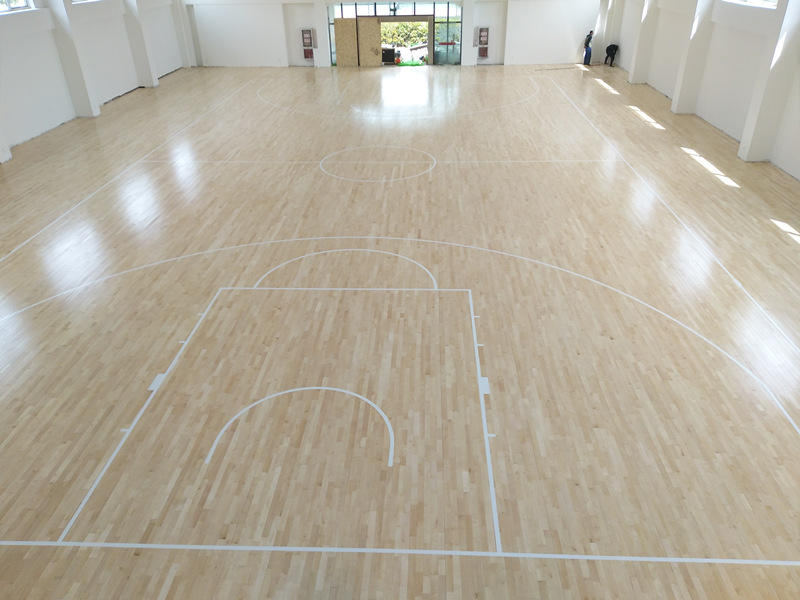
The debate between maple and oak for indoor basketball court flooring has been going on for decades. Both are hardwoods, both are durable, and both have been used in professional and recreational settings. But they are not the same, and the differences matter when you are choosing a floor for your court.
Maple is by far the more popular choice for basketball courts. It is the wood used in virtually every NBA arena and most NCAA facilities. The reasons are rooted in its physical properties. Maple is incredibly hard, with a Janka hardness rating that places it among the toughest domestic hardwoods. This means it resists dents, scratches, and wear far better than most alternatives.
The grain of maple is also very tight and uniform. This creates a smooth, consistent playing surface. When the ball bounces on maple, the response is even and predictable. There are no soft spots or irregularities that could affect gameplay. This consistency is why professional players and coaches overwhelmingly prefer maple.
Maple also takes finish exceptionally well. The tight grain allows the polyurethane or other protective coatings to bond evenly, creating a surface with the right balance of grip and glide. This is critical for player safety and performance.
Oak, on the other hand, has a more open grain pattern. This gives it a distinctive look that some facility owners prefer for aesthetic reasons. Oak is also very hard and durable, though generally not quite as hard as maple. The open grain can be a disadvantage on a basketball court because it can trap moisture and dirt, making maintenance more challenging.
In terms of ball response, oak performs well but is slightly less consistent than maple. The open grain can create minor variations in the bounce, which most players would not notice in casual play but which can be significant at the professional level.
Cost-wise, the two woods are comparable, though maple tends to be slightly more expensive due to its higher demand. The difference is usually not dramatic enough to be a deciding factor on its own.
For pure performance, maple is the clear winner. Its hardness, tight grain, and consistent ball response make it the ideal choice for any basketball court where performance matters. Oak is a fine wood and can work well in recreational settings where the absolute highest level of performance is not the priority. But if you want the same surface that professionals play on, maple is the way to go.
Leave a Reply