

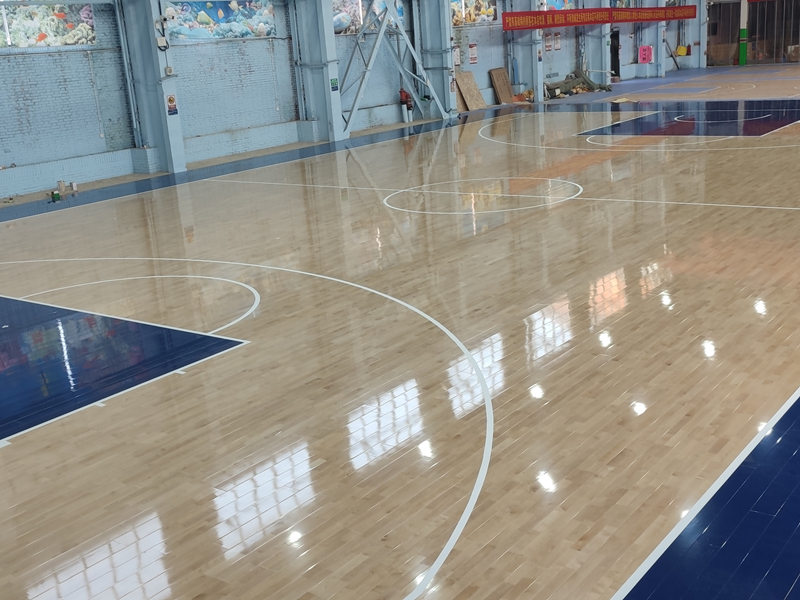
Installing a hardwood basketball court is one of the most precise construction projects you will ever encounter. It is not a weekend DIY job. It requires skilled craftsmen, specialized equipment, and a deep understanding of how wood behaves in a controlled environment. Here is a detailed look at how it is done.
The process begins with the subfloor. The subfloor must be perfectly level, with tolerances often measured in fractions of an inch over the entire court. Most subfloors are made of plywood over a concrete slab, though some installations use a floating floor system over a concrete base. The subfloor must be dry, clean, and free of any contaminants that could affect adhesion or cause moisture problems.
Once the subfloor is ready, a vapor barrier is installed. This is a critical step that prevents moisture from the concrete from migrating up into the wood. Moisture is the enemy of hardwood flooring. If it gets trapped between the subfloor and the wood, it can cause cupping, warping, and eventual failure of the floor.
Next comes the structural layer. This is typically made of softwood planks or engineered lumber that are nailed or screwed to the subfloor. This layer provides the structural support for the hardwood and also helps with shock absorption. In some systems, a layer of foam or rubber padding is added between the structural layer and the subfloor for additional cushioning.
The hardwood itself is then installed. The planks are typically three-quarters of an inch or one inch thick and are laid in a pattern that maximizes strength and stability. The most common pattern is a staggered layout, similar to how brick walls are built. Each plank is nailed or screwed into the structural layer below. The nails or screws are driven at an angle to ensure a secure hold while allowing the wood to expand and contract with changes in humidity.
After the hardwood is installed, the gaps between the planks are filled with a flexible compound. This compound allows the wood to move without creating gaps or cracks. It also helps to create a uniform surface.
The floor is then sanded. This is a multi-step process that removes any high spots and creates a perfectly smooth surface. The sanding is done with progressively finer grits, starting coarse and ending very fine.
Finally, the finish is applied. Most basketball courts use a water-based polyurethane finish. Multiple coats are applied, with light sanding between each coat. The finish must be applied evenly to avoid creating slippery spots or areas with too much grip.
The entire process, from subfloor preparation to final finish, can take several weeks for a standard court. The result is a floor that will perform beautifully for decades if properly maintained.
Leave a Reply