

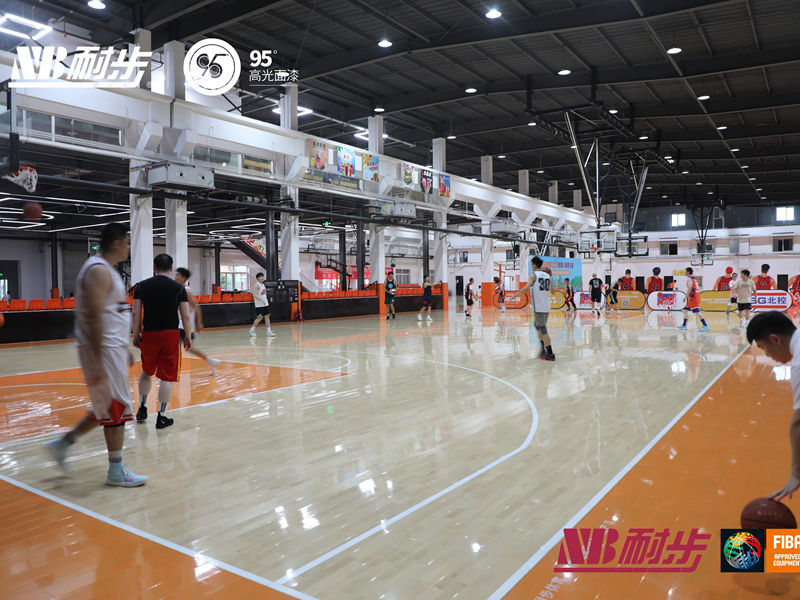
When you step onto a basketball court, the surface beneath your feet can make or break your entire experience. The bounce of the ball, the grip of your shoes, the comfort of your joints — all of these factors are directly influenced by the type of flooring you are playing on. While there are many options available, including concrete, rubber, and synthetic materials, hardwood remains the undisputed best surface for basketball courts. Let us explore in detail why hardwood is the superior choice and why it has maintained its dominance for over a century.
The Science Behind the Bounce
One of the most important qualities of a basketball court surface is its ability to return energy to the ball. When a basketball is dribbled or shot, it deforms slightly upon impact with the floor. A good court surface absorbs some of that energy and then returns it, causing the ball to bounce back up. This is known as the coefficient of restitution, and hardwood floors excel in this regard.
Hard maple, the wood most commonly used in professional basketball courts, has a coefficient of restitution that is remarkably consistent across the entire surface. This means that no matter where you are on the court, the ball will bounce the same way. This consistency is critical for players who need to develop muscle memory and anticipate the ball's trajectory. On surfaces like concrete, the bounce can be erratic and harsh, making it difficult for players to develop proper technique.
Shock Absorption and Joint Protection
Basketball is a high-impact sport. Players are constantly running, jumping, landing, and changing direction, all of which put tremendous stress on their knees, ankles, and hips. The surface they play on plays a huge role in how much of that impact is absorbed by the floor versus transmitted to the player's body.
Hardwood floors, when properly installed with a resilient subfloor system, provide excellent shock absorption. The wood flexes slightly under the weight of a player, absorbing some of the impact energy before it reaches the joints. Studies have shown that playing on hardwood reduces the risk of injury compared to playing on rigid surfaces like concrete. This is why professional teams and organizations invest so heavily in quality wooden floors — it is an investment in player health and longevity.
Traction and Grip
Another critical factor for basketball court surfaces is traction. Players need to be able to stop, start, and change direction quickly without slipping. A floor that is too slippery can lead to injuries, while a floor that is too sticky can cause players to tear ligaments when they try to change direction.
Hardwood provides the ideal balance of traction. When finished with a matte polyurethane coating, the surface offers enough grip for players to move confidently while still allowing their shoes to slide slightly when needed. This is why you will often see players performing crossover dribbles and sharp cuts on hardwood courts without losing their footing.
Durability and Longevity
A quality hardwood basketball court can last for decades with proper maintenance. Professional NBA courts are refinished regularly, but the underlying wood structure can remain intact for 30 to 50 years or more. This is in stark contrast to synthetic surfaces, which often need to be replaced every 5 to 10 years.
The durability of hardwood comes from its density and strength. Hard maple, in particular, is one of the hardest and most wear-resistant wood species available. It can withstand the constant impact of basketballs, the scuffing of athletic shoes, and the weight of players without showing significant signs of wear for many years.
Aesthetics and Atmosphere
Beyond performance, hardwood floors provide an aesthetic appeal that no other surface can match. The warm, natural look of wood creates an inviting atmosphere that enhances the overall experience of playing basketball. Professional arenas like Madison Square Garden and the Staples Center are famous not just for their teams but for their iconic hardwood courts.
For recreational facilities, a beautiful hardwood court can attract more players and create a sense of pride in the community. It transforms a simple gym into a destination where people want to play.
Environmental Considerations
Wood is a renewable resource, and when sourced from sustainably managed forests, hardwood flooring is an environmentally responsible choice. Many manufacturers now offer flooring certified by the Forest Stewardship Council (FSC), ensuring that the wood comes from responsibly managed forests. Compared to synthetic surfaces, which are made from petroleum-based materials and can release harmful chemicals, hardwood is a much greener option.
In summary, hardwood is the best surface for basketball courts because it delivers unmatched performance in terms of ball bounce, shock absorption, and traction. It is durable, beautiful, and environmentally friendly. If you are serious about basketball, there is simply no substitute for a quality hardwood court.
Leave a Reply