

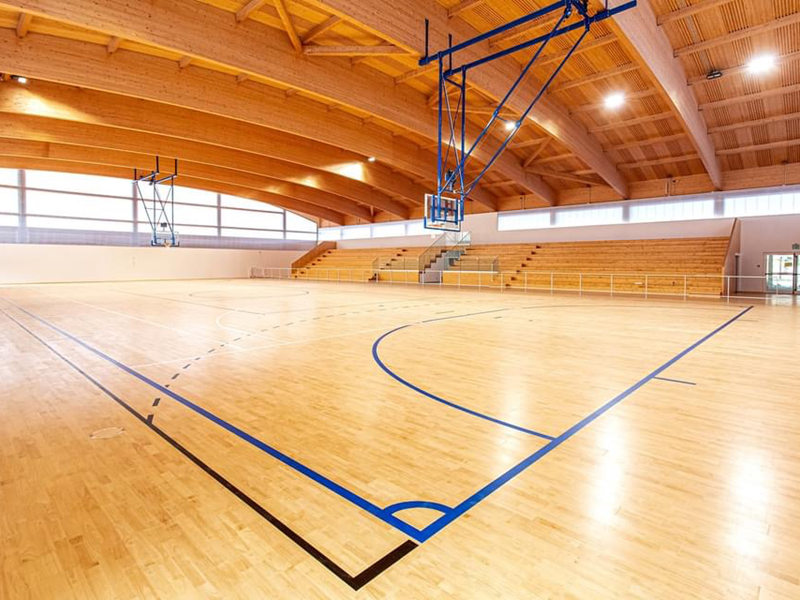
Basketball is one of the most popular sports in the world, played by millions of people in gyms, schools, recreation centers, and professional arenas. At the heart of every great basketball experience lies one crucial element: the flooring. While concrete and synthetic surfaces have their place, nothing compares to the feel, performance, and aesthetic appeal of a properly installed wooden basketball court floor. This comprehensive guide will walk you through everything you need to know about basketball court wooden flooring, from the types of wood used to installation, maintenance, and cost considerations.
Why Wood Is the Gold Standard
Wooden flooring has been the standard for basketball courts since the sport's inception. James Naismith invented basketball in 1891, and the original game was played on a wooden gymnasium floor. Over a century later, wood remains the preferred surface for both amateur and professional play. The reason is simple: wood provides the ideal combination of shock absorption, ball bounce, and traction that players need to perform at their best.
When a basketball hits a wooden floor, the energy is absorbed and returned in a predictable manner, giving players consistent ball feedback. This is something that concrete or asphalt floors simply cannot replicate. A hardwood floor also reduces the impact on players' joints, which is especially important for athletes who spend hours practicing and competing on the court.
Types of Wood Used
Not all wood is created equal when it comes to basketball court flooring. The two most commonly used species are hard maple and red oak. Hard maple, specifically sugar maple (Acer saccharum), is the industry standard for professional and collegiate courts. It is incredibly dense, durable, and has a tight grain structure that resists denting and wear. The NBA, NCAA, and FIBA all specify hard maple for their courts.
Red oak is a more affordable alternative that is commonly used in school gyms and recreational facilities. While it is not as hard or dense as maple, red oak still provides good performance and can last for many years with proper maintenance. Other species like birch, ash, and beech are occasionally used, but they are far less common.
Construction and Thickness
A professional basketball court floor is not simply a sheet of wood laid over concrete. It is a carefully engineered system consisting of multiple layers. The typical construction starts with a concrete subfloor, followed by a moisture barrier, then a layer of plywood or oriented strand board (OSB) for structural support. On top of that, individual wooden planks are installed, usually 20 to 22 millimeters thick for professional courts and 18 to 20 millimeters for recreational courts.
The planks are typically 60 to 70 millimeters wide and can vary in length. They are installed using either a nail-down or glue-down method, depending on the facility's requirements. The entire system is designed to flex slightly under the weight of players, providing shock absorption while maintaining a flat, consistent playing surface.
Finish and Coatings
The finish applied to a basketball court floor is just as important as the wood itself. Most courts are finished with a polyurethane or water-based polyurethane coating that provides protection against moisture, scuff marks, and wear. The finish also affects the gloss level of the floor, which in turn influences ball grip and traction. A matte finish is generally preferred for basketball because it provides better traction for players' shoes while still allowing the ball to bounce predictably.
Some facilities opt for a custom finish that includes court lines, team logos, and other markings. These are typically applied using stencils and specialty paints that are designed to withstand heavy foot traffic and ball impact.
Choosing the Right Floor for Your Facility
When selecting a wooden floor for your basketball court, there are several factors to consider. Your budget will play a major role, as professional-grade maple flooring can cost significantly more than recreational-grade oak. The intended use of the court is also important. If the court will host professional games or tournaments, you need a floor that meets the specifications of the governing body. For casual play, a more economical option may be perfectly adequate.
You should also consider the climate of your region. Wood is a natural material that expands and contracts with changes in temperature and humidity. In areas with extreme climate variations, you may need to invest in a more robust subfloor system or choose a wood species that is more stable under changing conditions.
In conclusion, wooden flooring remains the undisputed champion of basketball court surfaces. With the right wood species, proper construction, and diligent maintenance, a wooden basketball court can provide decades of outstanding performance. Whether you are building a new facility or renovating an existing one, investing in quality wooden flooring is an investment in the quality of the game itself.
Leave a Reply