

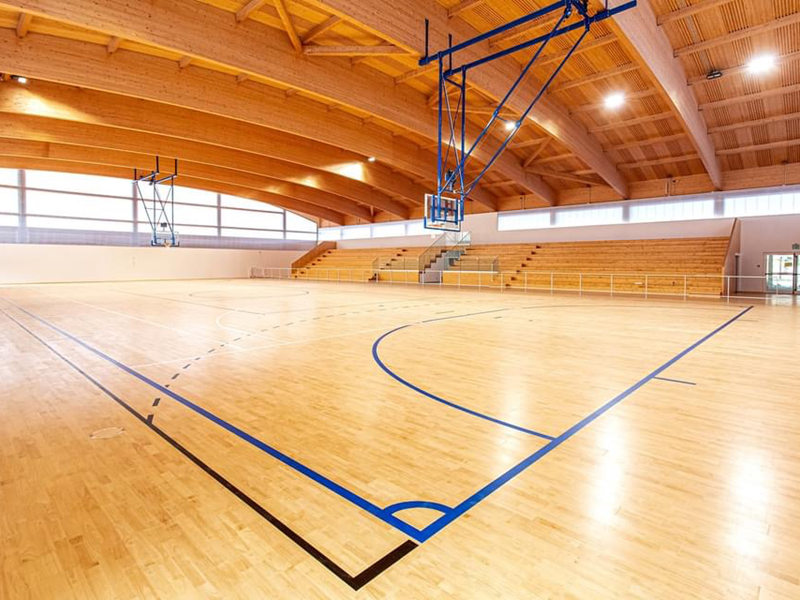
Portable indoor basketball court wooden flooring refers to a specialized flooring system designed specifically for basketball play that can be assembled, disassembled, relocated, and reused multiple times without permanent installation. Unlike traditional hardwood floors that are nailed or glued directly to a subfloor, portable systems use interlocking panels, modular tiles, or rolling surfaces that sit on top of an existing floor. The surface layer mimics the look, feel, and performance of professional hardwood basketball courts, but the entire system is engineered for mobility.
The core concept behind portable wooden flooring is flexibility. Schools, community centers, gymnasiums that host multiple sports, event venues, and even homeowners who want a basketball court in their garage or basement can benefit from a system that does not require permanent construction. The wood surface — typically made from hardwood species like maple, oak, or beech, or high-density engineered alternatives — provides the friction, ball bounce, and shock absorption that players expect from a real court.
What makes these systems truly "portable" is the substructure. Instead of being anchored to concrete, the panels rest on a framework of aluminum, steel, or high-strength polymer supports. Some systems use a floating floor design where the panels are not connected to each other at all, allowing each tile to move independently. Others use a semi-permanent interlocking mechanism that creates a seamless playing surface while still allowing the entire court to be rolled up or folded away.
The thickness of portable wooden flooring typically ranges from 18mm to 25mm, which is thinner than permanent hardwood courts (which are usually 20mm to 22mm installed over a plywood subfloor). To compensate, portable systems often include a built-in shock absorption layer made from foam, rubber, or a combination of both. This layer sits between the substructure and the wood surface, providing the cushioning that protects players' joints.
One of the most important specifications to understand is the areal density of the flooring, measured in kilograms per square meter. A higher areal density generally means better performance, more stability, and a more authentic playing experience. Budget portable systems may weigh as little as 15 kg/m², while premium systems can exceed 25 kg/m². The difference is noticeable in ball bounce consistency, sound dampening, and how the floor responds under lateral movement.
Portable indoor basketball court wooden flooring has evolved significantly over the past two decades. Early versions were essentially thin plywood sheets with a laminate surface — functional but far from ideal. Today's systems use multi-layer engineered construction with UV-cured finishes, precision-milled tongue-and-groove connections, and performance-tested shock absorption. The result is a product that can genuinely replicate the experience of playing on a permanent hardwood court, with the added benefit of being able to pack it away when you are done.
Leave a Reply