

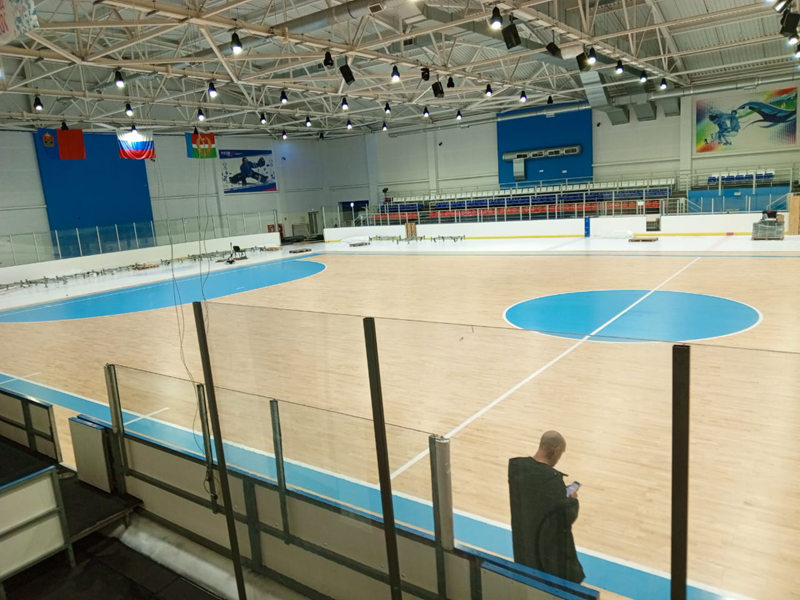
The first and most impactful decision you will make when designing your indoor basketball court wooden flooring system is selecting the right wood species for your top playing surface. Different wood varieties offer vastly different levels of hardness, grain pattern, visual appearance, wear resistance, and long-term performance, and the choice you make here will shape every aspect of how your court feels, looks, and holds up over years of heavy use.
Hard maple is the most widely used and universally respected wood species for professional and collegiate indoor basketball court wooden flooring, and it has remained the industry standard for more than half a century. With a Janka hardness rating of approximately 1450 pounds, hard maple is extremely dense, highly resistant to denting and scratching from basketball shoes, heavy equipment, and repeated foot traffic, and it maintains a consistent, light, clean aesthetic that has become synonymous with top-tier basketball competition. Its fine, tight grain creates an exceptionally smooth, uniform playing surface that delivers precise, predictable ball response, making it the go-to choice for venues that host high-stakes competitive games and want a floor that performs at the highest possible level.
Oak is another popular option for indoor basketball court wooden flooring, especially for multi-purpose gymnasiums, school training facilities, and community centers that host a wide range of sports and events beyond just basketball. Red oak has a Janka hardness rating of around 1290 pounds, while white oak is slightly harder at approximately 1360 pounds, offering excellent durability while still being slightly more forgiving underfoot than hard maple. Oak features a much more pronounced, distinct grain pattern that gives the court a warmer, more traditional visual character, and it holds up extremely well to heavy, varied use, making it a practical choice for venues that cannot afford to limit their floor usage exclusively to basketball.
Beech wood, which has a hardness level very close to hard maple, is a staple of European indoor basketball court wooden flooring design, and it is growing in popularity in other regions around the world. It offers exceptional structural stability, consistent ball bounce, and a light, uniform color that creates a bright, open feeling in any indoor arena. For venues that want the performance characteristics of maple but are looking for a more cost-effective or locally sourced wood option, beech is an excellent alternative that delivers nearly identical functional results.
Beyond these three major species, there are other less common wood varieties that can be used for indoor basketball court wooden flooring, each with their own unique advantages and tradeoffs. No matter which species you select, it is critical to source wood that has been properly graded, kiln-dried, and treated to resist moisture, insects, and fungal growth, as these pre-treatment steps are the foundation of a long-lasting, high-performance playing surface.
Leave a Reply