

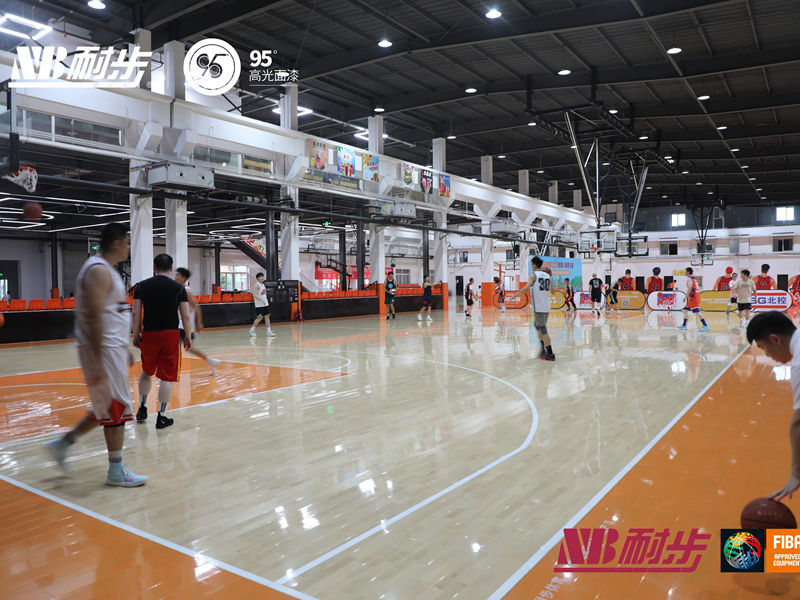
While the top wood species gets most of the attention, the full performance of your indoor basketball court wooden flooring system depends just as heavily on the thickness of the wood panels and the multi-layer structural design hidden beneath the visible playing surface. These elements determine how durable your floor will be, how well it absorbs impact, how stable it remains through seasonal changes in temperature and humidity, and how consistent the playing experience will be for every athlete that steps onto the court.
For the top solid wood layer of indoor basketball court wooden flooring, the standard recommended thickness range is between 18 and 22 millimeters. Thinner panels below 18 millimeters are more prone to denting, warping, and premature wear, even under moderate levels of play, and they cannot be refinished multiple times over the life of the floor. Panels in the 18 to 20 millimeter range are a practical, cost-effective choice for training facilities, community centers, and school gyms that see regular but not elite-level heavy use, offering excellent durability at a more accessible price point. 22 millimeter solid wood panels are the premium standard for professional competition arenas, as their extra thickness delivers superior structural rigidity, a more substantial, high-quality feel underfoot, and the ability to be sanded and refinished multiple times over decades of use, extending the total lifespan of the floor dramatically.
Beneath the top wood layer, a complete high-performance indoor basketball court wooden flooring system includes several additional critical structural components that work together to create the ideal playing experience. The first of these is the elastic shock pad layer, which is placed between the subfloor and the top wood panels. This layer is engineered to compress slightly when an athlete lands from a jump, absorbing the majority of the impact force that would otherwise be transferred directly to the player’s joints, while immediately rebounding to its original shape to maintain consistent support for the next movement. Different densities of shock pads can be selected to adjust the firmness of the floor, allowing designers to tune the exact feel of the court to match the specific needs of the venue’s players.
Next, the subfloor structure of indoor basketball court wooden flooring provides the foundational stability that prevents the top wood layer from shifting, warping, or developing uneven spots over time. Modern systems often use a network of pressure-treated wooden sleepers, arranged in a carefully spaced grid, that create a small, controlled air gap between the ground and the playing surface. This air gap allows for consistent air circulation beneath the floor, preventing moisture buildup that could cause the wood to swell, rot, or develop mold, even in humid indoor environments. Some advanced systems also include a moisture barrier layer between the concrete base and the subfloor, adding an extra layer of protection against rising damp that is one of the most common causes of premature failure in basketball court wooden flooring.
Every element of this multi-layer design is carefully calibrated to meet international performance standards, ensuring that the floor delivers uniform shock absorption, consistent ball bounce, and reliable structural stability across every square foot of the court. A well-designed structural system will not only improve player performance and safety, but it will also drastically reduce long-term maintenance costs and extend the usable life of your court by many years.
Leave a Reply