

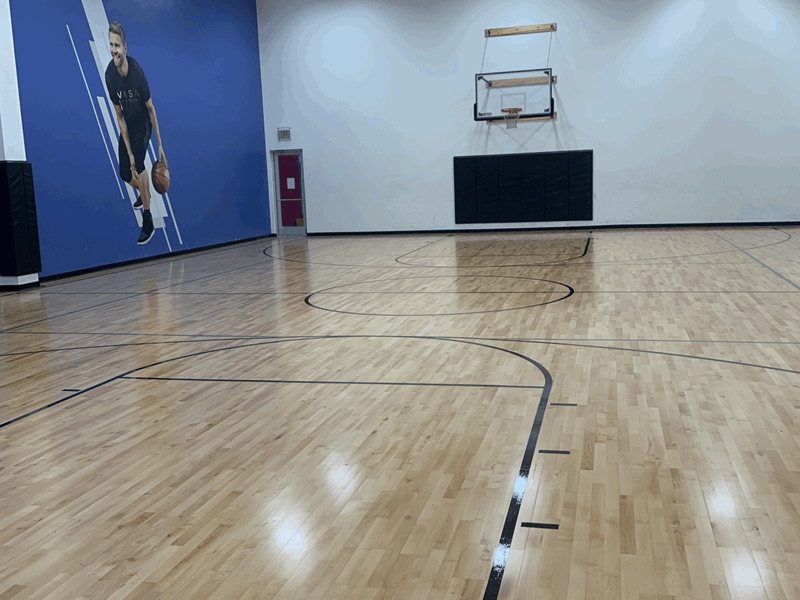
Cost is one of the primary factors in any flooring decision, and modular indoor sports wood flooring is no exception. However, understanding the true cost requires looking beyond the price per square meter and considering the full picture — including installation, maintenance, lifespan, and residual value.
The upfront cost of modular sports wood flooring varies widely depending on the wood species, panel thickness, shock absorption system, and performance certification. On a per-square-meter basis, modular systems typically range from moderate to premium pricing, often comparable to or slightly above traditional sports wood floors. The premium reflects the engineered nature of the system — the precision-milled locking mechanisms, the factory-finished surfaces, and the integrated shock absorption components all add to the material cost.
Installation costs for modular systems are significantly lower than for traditional floors. Because the panels lock together without adhesives or nails, the labor required is less skilled and less time-intensive. A typical modular installation for a gymnasium might cost 30 to 50 percent less in labor than a traditional installation. For large facilities, this difference can amount to tens of thousands of dollars in savings.
Maintenance costs over the life of the floor are where modular systems really demonstrate their economic advantage. The ability to replace individual panels rather than refinishing large sections means lower repair costs and less downtime. Routine maintenance is also simpler and less frequent. Over a 20-year period, the cumulative maintenance savings can be substantial.
Lifespan and residual value are often overlooked in cost analysis. A well-maintained modular sports wood floor can last 25 to 30 years, and because the panels can be refinished multiple times, the effective lifespan of the wood surface is even longer. Perhaps most importantly, modular floors retain resale value. If a facility is renovated or the organization relocates, the floor can be disassembled and sold or reinstalled elsewhere. Traditional floors have essentially zero resale value once installed.
When you factor in all of these elements — lower installation costs, reduced maintenance expenses, extended lifespan, and residual value — the total cost of ownership for modular sports wood flooring is often lower than that of traditional systems, even when the upfront price is higher.
It is also worth noting that financing and leasing options are increasingly available for modular sports flooring systems, making it possible for organizations with limited capital budgets to access high-performance floors without a large upfront outlay.
The bottom line is that evaluating the cost of modular sports wood flooring requires a long-term perspective. The cheapest option upfront is not always the cheapest option over time, and modular systems consistently demonstrate strong value when the full lifecycle is considered.
Leave a Reply