

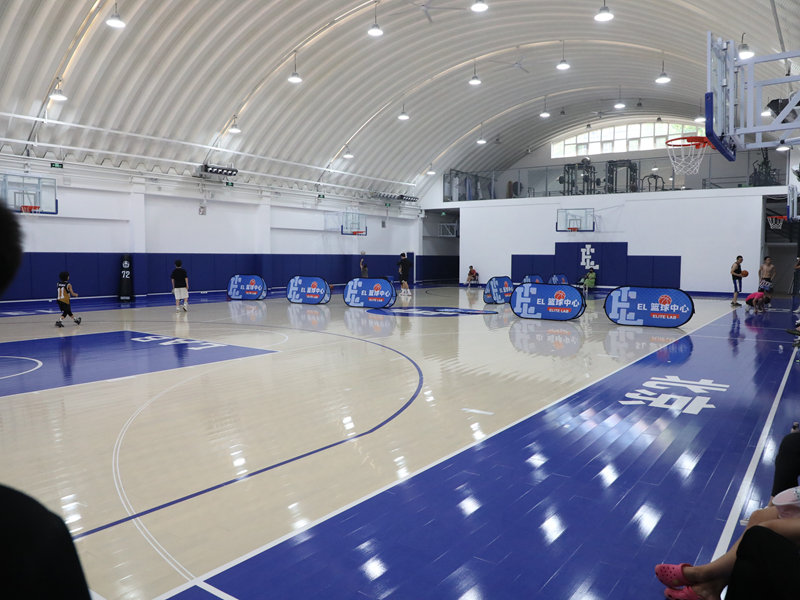
The debate between modular and traditional sports wood flooring is one that facility managers, architects, and sports organizations face regularly. Both systems have their place, but understanding the differences in detail helps make an informed decision. This comparison covers installation, performance, maintenance, cost, flexibility, and lifespan.
Installation is perhaps the most visible difference. Traditional sports wood flooring is installed plank by plank, with each board glued and nailed to the subfloor. The process requires skilled craftspeople, extensive on-site work, and significant curing time for adhesives. A full gymnasium installation can take four to eight weeks. Modular flooring, by contrast, uses pre-manufactured panels with interlocking edges that snap together on-site. Installation is faster, requires less specialized labor, and can be completed in five to ten days for a comparable space. The modular approach also eliminates the need for on-site sanding and finishing in most cases.
In terms of performance, both systems can achieve excellent results when properly installed and certified to meet sports standards. However, modular systems have a slight edge in consistency. Because the panels are manufactured in a controlled factory environment, there is less variation in thickness, flatness, and surface quality. Traditional floors, being installed by hand, can have minor inconsistencies that affect ball bounce and playing surface uniformity. That said, a well-installed traditional floor can perform just as well as a modular one.
Maintenance is where modular systems clearly excel. With traditional flooring, a damaged section requires cutting out boards, patching the subfloor, and refinishing to match — a labor-intensive and disruptive process. With modular flooring, you simply unlock the damaged panel and replace it. This reduces downtime from days or weeks to hours. Over the life of the floor, this difference in maintenance ease can translate to significant cost savings.
Cost comparison requires looking at total cost of ownership, not just upfront price. Traditional floors may have a lower initial material cost, but the higher labor costs for installation, the greater expense of repairs, and the inability to relocate or reuse the floor all add up. Modular floors typically have a higher upfront cost but lower lifecycle costs due to faster installation, easier maintenance, and the ability to recover value through relocation or resale.
Flexibility is another major differentiator. Traditional floors are permanent. Once installed, they are essentially part of the building. If the facility changes use or the organization moves, the floor stays behind — or must be destroyed at great expense. Modular floors can be disassembled and reinstalled elsewhere, making them ideal for schools, community centers, event venues, and organizations that may relocate. This flexibility also extends to reconfiguration within the same space — panels can be rearranged to change court markings or adapt the space for different sports.
Lifespan is comparable when both systems are well maintained, typically 20 to 30 years for the wood surface. However, modular systems have an advantage in that individual panels can be replaced as they wear, effectively extending the life of the overall system beyond what is possible with traditional floors.
In summary, modular sports wood flooring offers clear advantages in installation speed, maintenance ease, flexibility, and lifecycle cost. Traditional flooring may still be preferred in situations where a permanent, single-purpose installation is desired and budget constraints are tight. But for most modern facilities, modular is the smarter long-term choice.
Leave a Reply