

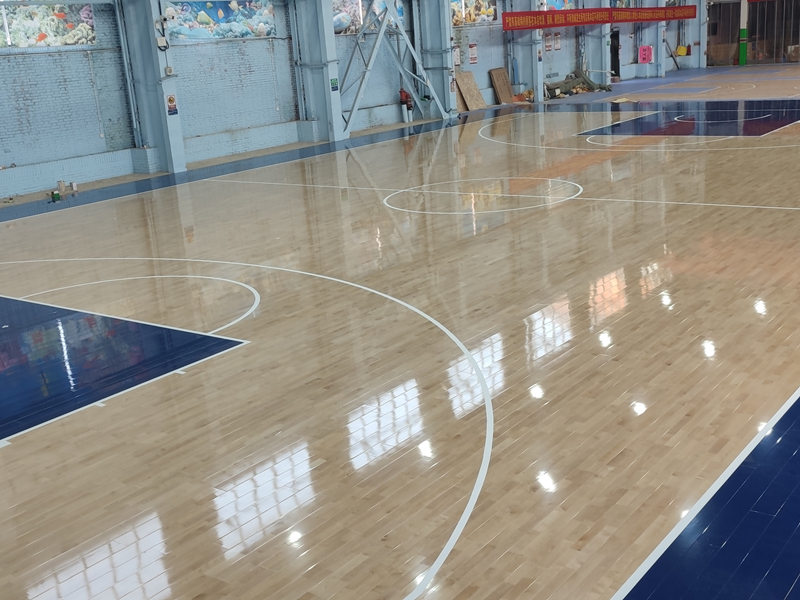
A modular indoor sports wood floor is a significant investment, and like any investment, it requires proper care to deliver maximum performance and lifespan. The good news is that modular systems are among the easiest sports floors to maintain, thanks to their replaceable-panel design and factory-finished surfaces. However, neglect can still lead to premature wear, performance degradation, and costly repairs.
Daily maintenance is relatively simple. The floor should be swept or vacuumed regularly to remove dust, dirt, and debris that can act as abrasives on the surface. A dry microfiber mop is ideal for routine cleaning. Wet mopping should be done sparingly and only with a minimally damp mop — excess moisture is the enemy of any wood floor, as it can cause warping, swelling, and finish deterioration. For sports floors specifically, the surface finish is designed to provide optimal friction, and excessive water can alter that friction temporarily or permanently.
Periodic deep cleaning should be performed using a pH-neutral cleaner specifically designed for sports wood floors. Harsh chemicals, bleach, ammonia-based cleaners, and wax-based products should never be used, as they can damage the finish and reduce surface friction. After deep cleaning, the floor should be allowed to dry completely before use.
One of the unique maintenance advantages of modular flooring is spot repair. If a panel becomes scratched, dented, or stained, it can be removed and replaced without affecting the surrounding floor. This is vastly superior to traditional floors, where a single damaged board might require sanding and refinishing an entire section. Keeping a few spare panels on hand is a wise practice for any facility with a modular floor.
Refinishing is another maintenance task that modular floors handle well. Over time, the surface finish will wear down, reducing friction and making the floor look dull. When this happens, the entire floor surface can be sanded and recoated — typically every five to ten years depending on usage intensity. Because modular panels are manufactured to uniform thickness, the refinishing process is more predictable and consistent than with traditional floors. Some systems allow for panel-by-panel refinishing, which minimizes downtime.
Preventive maintenance is equally important. Furniture, equipment, and carts should have soft wheels or protective pads to prevent scuffing. High-heel shoes should be prohibited on the floor. Heavy equipment should never be dragged across the surface. These simple precautions can extend the life of the finish by years.
Climate control is often overlooked but is critical for wood floor longevity. Indoor sports facilities should maintain a relative humidity between 40 percent and 60 percent and a temperature between 18 and 22 degrees Celsius. Significant fluctuations in humidity can cause the wood to expand and contract, leading to gaps between panels, buckling, or cracking.
By following these maintenance guidelines, a modular sports wood floor can deliver excellent performance for 20 to 30 years or more — a lifespan that justifies the initial investment many times over.
Leave a Reply