

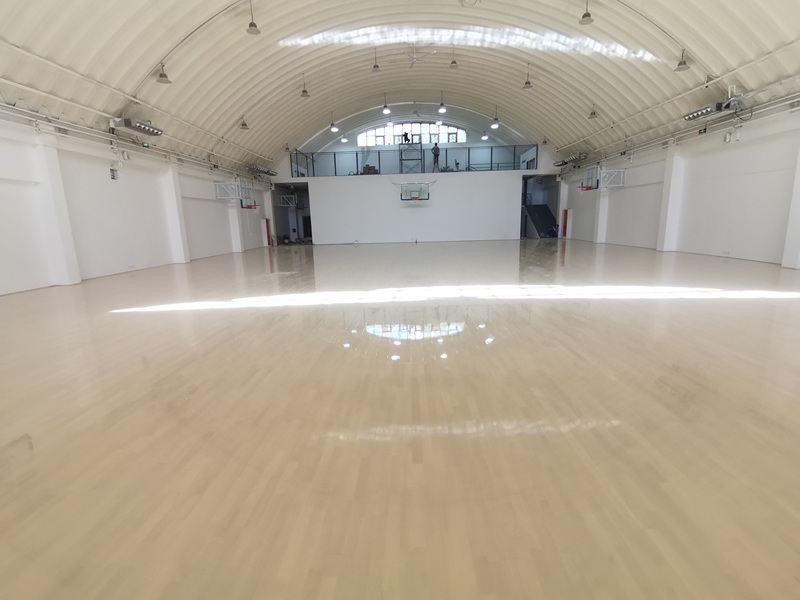
Shock absorption is one of the most critical performance characteristics of any indoor sports floor, and it is often the most misunderstood. For modular indoor sports wood flooring, the shock absorption system is not an afterthought — it is an integral part of the engineered floor system that directly impacts athlete safety, performance, and comfort.
Shock absorption refers to the floor's ability to reduce the impact forces that are transmitted through an athlete's body when they land from a jump, change direction, or make a sudden stop. Without adequate shock absorption, these forces are transmitted directly to the joints — particularly the knees, ankles, and spine — increasing the risk of injury over time. Professional athletes, who subject their bodies to repetitive high-impact movements, are especially vulnerable.
International sports standards define specific shock absorption requirements for different sports. For example, basketball requires a minimum shock absorption of 35 percent, while handball requires 53 percent. These numbers represent the percentage of impact force that the floor must absorb. A floor that does not meet these standards cannot be used for official competition.
In modular sports wood flooring, shock absorption is achieved through a layer installed between the subfloor and the wood panels. The most common technologies include rubber pads, spring mounts, foam blocks, and hybrid combinations. Each has different performance characteristics:
Rubber pads are the most basic option. They provide consistent shock absorption and are relatively inexpensive. However, they offer less energy return, which can make the floor feel "dead" under athletes' feet.
Spring mounts are the premium option. They provide excellent shock absorption combined with high energy return, giving athletes a responsive, lively feel. Spring-mounted systems are typically used in professional and competition-level facilities. They are more expensive but deliver the best performance.
Foam blocks offer a middle ground. They are lightweight, easy to install, and provide good shock absorption at a moderate cost. They are commonly used in school and recreational facilities.
Hybrid systems combine two or more technologies to balance performance and cost. For example, a system might use foam for the majority of the floor and spring mounts in high-impact zones such as under the basketball hoops.
The choice of shock absorption system should be guided by the sports standards you need to meet, the level of athletic activity, and your budget. But regardless of the technology, the key takeaway is that shock absorption is not optional — it is a fundamental requirement for any serious sports floor. A modular system that allows you to select and even upgrade the shock absorption layer over time is a significant advantage, as it ensures the floor can adapt to changing needs.
Leave a Reply