

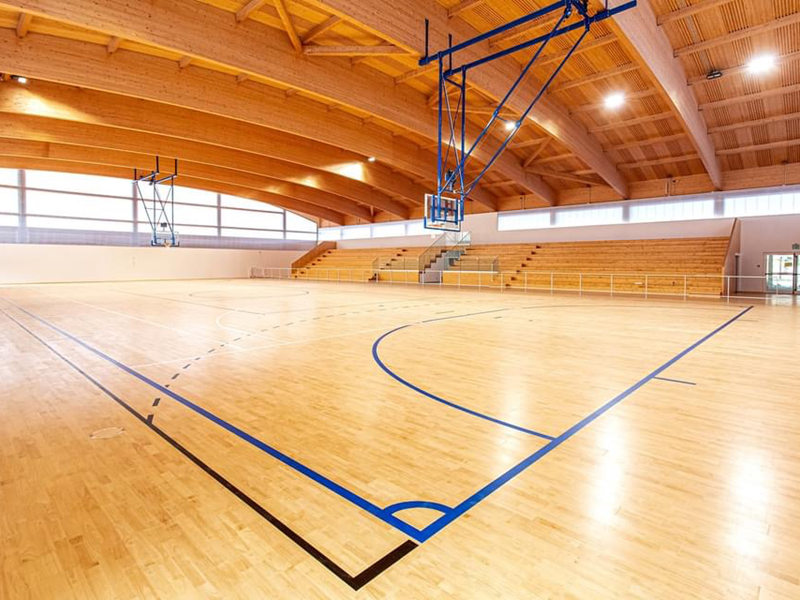
Selecting the right wooden flooring for an indoor basketball court is one of the most important decisions a facility manager, coach, or athletic director will ever make. The floor is not just a surface — it is the foundation of every game, every practice, and every moment an athlete spends in the gym. A poor choice can lead to injuries, poor ball bounce, excessive noise, and a floor that deteriorates within a few years. A great choice can elevate performance, protect athletes, and last for decades with proper care.
When you begin the process of choosing indoor basketball court wooden flooring, the first thing you need to understand is that not all wood flooring is created equal. There are several types of wood systems specifically engineered for athletic use, and each comes with its own set of advantages and limitations. The three primary categories are solid hardwood flooring, engineered hardwood flooring, and floating hardwood flooring systems. Each of these has a distinct construction method that affects how the floor performs under the intense demands of basketball.
Solid hardwood flooring is made from a single piece of wood, typically maple or oak, milled to a uniform thickness. This is the gold standard in professional and collegiate basketball. The reason is simple: solid wood provides the most consistent ball bounce, the best shock absorption when combined with a proper subfloor system, and the most authentic feel that players expect. However, solid hardwood is also the most expensive option, and it requires a more complex installation process. It must be nailed or glued directly to a concrete or plywood subfloor, and it is sensitive to moisture and temperature changes, which means the facility must maintain strict environmental controls.
Engineered hardwood flooring is made from multiple layers of wood bonded together, with a hardwood veneer on top. This construction makes it more stable than solid wood, meaning it is less likely to warp, cup, or gap when exposed to humidity fluctuations. Engineered floors are a popular choice for high school gyms and community centers where budget constraints exist but quality is still a priority. The performance is very close to solid hardwood, especially when the top veneer is thick enough — typically at least three millimeters.
Floating floor systems are another option that has gained popularity in recent years. These systems consist of individual planks that interlock and float above a foam or rubber underlayment. They do not require nails or glue, which makes installation faster and less invasive. Floating systems are excellent for multi-purpose facilities where the floor needs to be convertible for different sports. However, they may not provide quite the same level of ball bounce consistency as nailed-down solid hardwood.
Beyond the type of wood system, you must also consider the species of wood. Hard maple is by far the most popular choice for basketball courts in North America. It is incredibly dense, which means it resists dents and wear from constant foot traffic and ball impacts. Maple also has a tight grain pattern that provides excellent ball grip and a consistent bounce. Other species like oak, birch, and ash are sometimes used, but they do not match maple in terms of hardness and durability. European beech is another option that is gaining traction, particularly in international markets, because it offers similar hardness to maple at a slightly lower cost.
Thickness is another critical factor. Professional basketball courts typically use wood planks that are between twenty and twenty-two millimeters thick. Thinner floors, such as those in the eighteen to twenty millimeter range, may be acceptable for recreational use but will not meet the standards required for competitive play. The thickness of the wood directly affects the floor's ability to absorb shock and return energy to the ball.
Finish is also something you should not overlook. There are two main types of finishes used on basketball court floors: water-based polyurethane and oil-based polyurethane. Water-based finishes are more environmentally friendly, dry faster, and produce less odor. They also tend to be slightly less slippery, which is a safety advantage. Oil-based finishes are more traditional and provide a deeper, richer look, but they take longer to cure and emit stronger fumes during application. Both types can be applied in multiple coats to achieve the desired level of gloss — typically a semi-gloss finish is preferred for basketball courts because it provides enough shine to reduce glare while maintaining a smooth playing surface.
The subfloor system is arguably just as important as the wood itself. A proper subfloor consists of a layer of plywood or oriented strand board (OSB) installed over a concrete slab, followed by a layer of foam or rubber padding, and then the wood flooring on top. The padding layer is what gives the floor its shock absorption and ball return characteristics. Without adequate padding, even the finest hardwood will feel hard and unforgiving, increasing the risk of injury to players' knees, ankles, and joints.
When evaluating costs, it is important to look beyond the initial purchase price. A cheap floor that needs to be replaced in five years is far more expensive in the long run than a premium floor that lasts twenty-five years or more. Factor in installation costs, maintenance costs, and the cost of potential injuries caused by a substandard surface. The total cost of ownership over the life of the floor is what truly matters.
In summary, choosing indoor basketball court wooden flooring requires careful consideration of the wood type, construction method, species, thickness, finish, subfloor system, and budget. Take your time, consult with experienced installers, and always prioritize the safety and performance of the athletes who will be using the floor. The right floor is an investment in the health, performance, and enjoyment of every player who steps onto the court.
Leave a Reply