

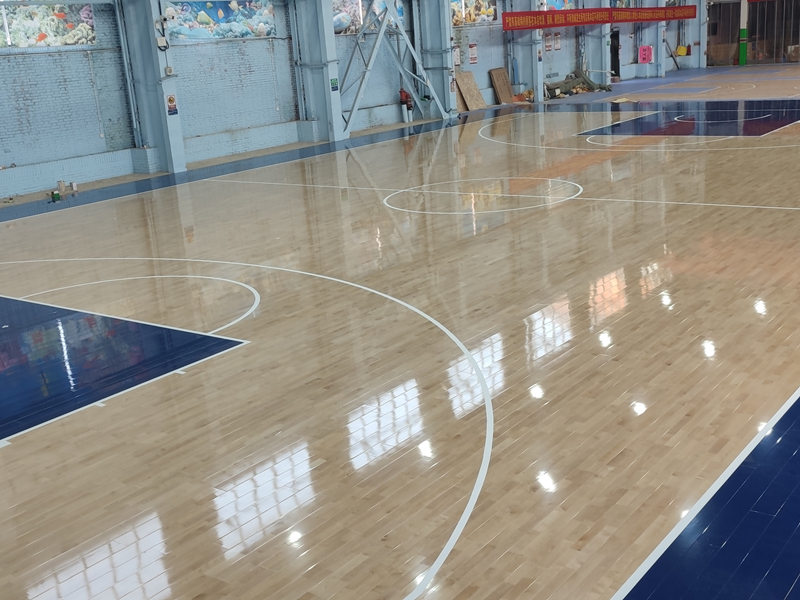
When people hear the cost of indoor basketball court hardwood flooring, the sticker shock can be real. A fully installed system can cost anywhere from ten to twenty-five dollars per square foot, and for a full-sized court, that adds up quickly. A standard NBA-sized court is 94 feet by 50 feet, or 4,700 square feet. At fifteen dollars per square foot, that is over seventy thousand dollars just for the flooring system, not including the building itself.
But cost is not just about the initial purchase price. It is about total cost of ownership over the life of the floor. And when you look at the full picture, hardwood is often more economical than it appears.
Let us break down the cost components. The hardwood itself is the largest single expense. Premium-grade maple planks, 20 to 26 millimeters thick, can cost five to eight dollars per square foot. The subfloor, typically plywood or oriented strand board, adds another one to three dollars per square foot. The shock absorption system adds two to four dollars per square foot. Labor for installation can range from three to six dollars per square foot, depending on the region and the complexity of the job. Finishing, including sanding, sealing, and line painting, adds another one to two dollars per square foot.
So the initial investment is substantial. But consider the alternatives. Synthetic sports surfaces, such as polyurethane or rubber flooring, may have a lower upfront cost, typically six to twelve dollars per square foot installed. However, these surfaces have a shorter lifespan, typically ten to fifteen years before they need replacement. Hardwood, properly maintained, can last twenty-five to forty years. Over a thirty-year period, the hardwood floor may actually cost less in total, even with the higher initial investment and the cost of periodic recoating.
Maintenance costs for hardwood are also relatively modest. Daily sweeping and damp mopping require minimal labor and supplies. The major maintenance expense is recoating, which typically costs two to four dollars per square foot every three to five years. Over thirty years, you might recoat five to seven times, adding ten to twenty-eight dollars per square foot in maintenance costs. Added to the initial installation, the total cost over thirty years might be twenty-five to fifty dollars per square foot.
Compare that to synthetic flooring, which might need full replacement two or three times in thirty years, at six to twelve dollars per square foot each time, plus ongoing maintenance. The total could easily exceed thirty to fifty dollars per square foot as well, but with the added disadvantage of a playing surface that does not perform as well.
There are also intangible costs to consider. A hardwood floor provides a better playing experience, which can attract more players, more leagues, and more revenue. It also increases the value of the facility. A building with a professional-grade hardwood basketball court is worth more than one with a worn-out synthetic surface.
Financing options are available for many facilities. Some flooring manufacturers and installation companies offer payment plans. Government grants and community funding programs may also be available, especially for school and public recreation facilities.
The bottom line is that indoor basketball court hardwood flooring is expensive upfront, but it is a long-term investment. When you factor in lifespan, performance, maintenance, and facility value, it is often the most cost-effective option available. The key is to buy quality, install it correctly, and maintain it consistently.
Leave a Reply