

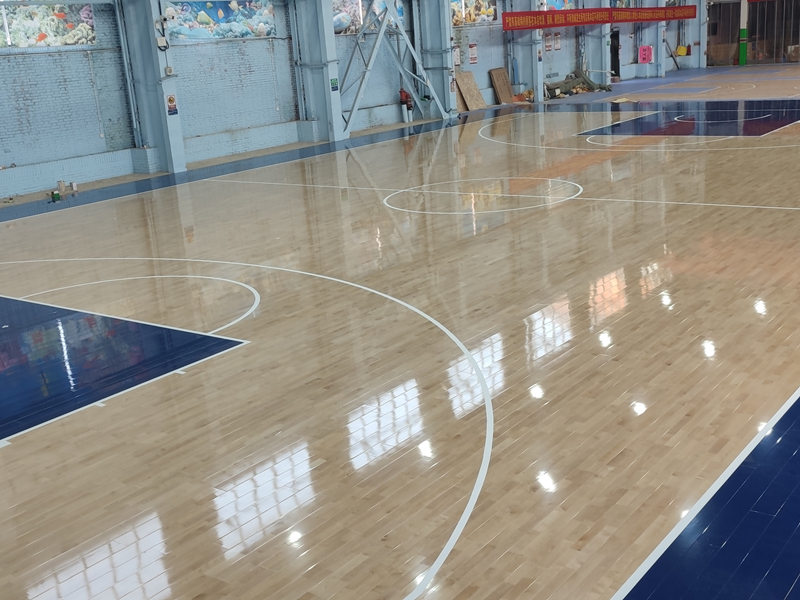
Many facility owners are surprised by the total cost of a hardwood basketball court. The sticker price of the wood itself is only part of the equation. Understanding the full cost breakdown helps you budget accurately and avoid unpleasant surprises.
The material cost for hardwood flooring typically ranges from eight to fifteen dollars per square foot, depending on species, thickness, and grade. For a standard full-size court, which is approximately forty-seven hundred square feet of playing surface, the wood alone can cost between thirty-seven thousand six hundred and seventy thousand five hundred dollars.
Installation labor is the next major expense. Professional installation for a basketball court ranges from five to ten dollars per square foot, depending on the region and the complexity of the project. This adds another twenty-three thousand five hundred to forty-seven thousand dollars to the total.
The subfloor preparation can add significantly to the cost if the existing concrete is in poor condition. Moisture mitigation, leveling compounds, and underlayment systems can add three to eight dollars per square foot.
Finishing is another cost center. A quality sport finish applied in multiple coats can cost two to four dollars per square foot. Line painting typically runs one to two dollars per square foot.
Adding these together, the total installed cost for a hardwood indoor basketball court typically falls between fifteen and thirty dollars per square foot, or roughly seventy thousand to one hundred forty-one thousand dollars for a full-size court.
But the cost does not end at installation. Annual maintenance, including cleaning supplies, periodic recoating, and eventual refinishing, adds roughly one to two dollars per square foot per year. Over a thirty-year lifespan, maintenance costs can equal or exceed the original installation cost.
When compared to alternative surfaces like poured rubber or interlocking sports tiles, hardwood is more expensive upfront but often cheaper over the full lifecycle. Rubber surfaces may cost less to install but typically need replacement every ten to fifteen years, while hardwood can last three times as long with proper care.
The key takeaway is that hardwood is not a budget option. But for facilities that prioritize performance, aesthetics, and longevity, it is the most cost-effective choice in the long run.
Leave a Reply