

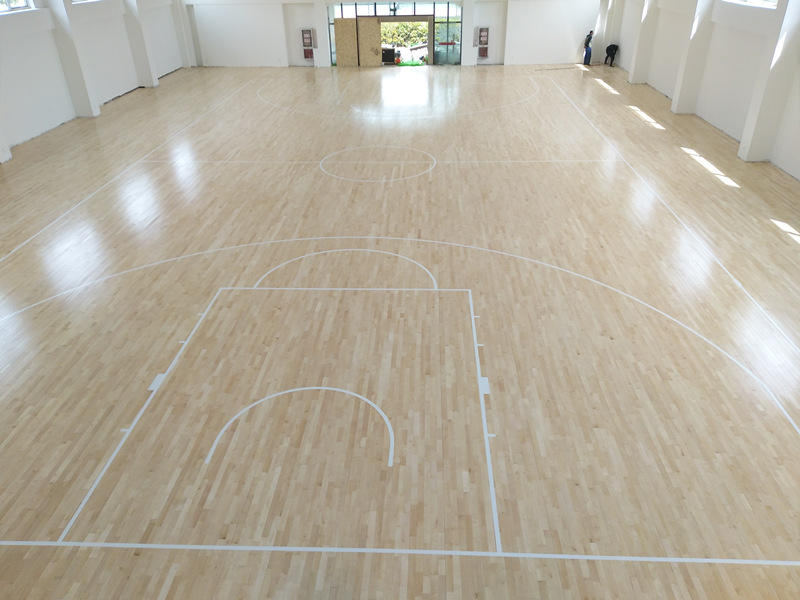
Beneath the visible, polished top layer of indoor basketball court wooden flooring lies a carefully engineered system of structural layers that work together to create a surface that is both high-performing and remarkably durable. The very bottom layer of this system typically consists of a moisture barrier that separates the entire floor structure from the underlying concrete slab of the building. This barrier is critical because it prevents moisture from seeping up through the concrete and into the wooden layers above, a common issue that can cause wood to warp, swell, or buckle over time if left unaddressed. Without this foundational moisture protection, even the highest quality top wood layer would quickly develop uneven spots that disrupt gameplay and create safety hazards for players.
Above the moisture barrier, most high-quality indoor basketball court wooden flooring systems include a series of resilient pads or rubberized supports that elevate the rest of the floor structure slightly above the concrete. These pads are designed to compress slightly under impact, creating the primary source of shock absorption that protects players’ joints, and they are spaced at precise intervals across the entire court to ensure that this cushioning effect is completely uniform. On top of these pads, a layer of sturdy plywood or oriented strand board creates a stable, level base that distributes weight evenly across the entire floor, preventing any single point from bearing too much pressure and developing a soft spot or a dip that could disrupt a player’s footing. This middle structural layer also adds dimensional stability to the entire system, preventing the wooden top layer from shifting or moving as temperature and humidity levels change inside the facility.
The topmost layer of indoor basketball court wooden flooring is the solid or engineered wood surface that players interact with directly, and it is selected for its exceptional strength, hardness, and ability to stand up to constant abrasion from basketball shoes, heavy equipment, and frequent use. This top layer is milled to a precise thickness, typically between 16 and 22 millimeters, and each plank is carefully graded to ensure consistent density and grain pattern across the entire court. After installation, this top layer is sanded multiple times to create a perfectly flat, smooth surface, then sealed with multiple coats of a tough, wear-resistant finish that protects the wood from scuffs, scratches, and moisture spills. When all these layers work in harmony, the resulting floor can withstand decades of heavy use, supporting thousands of hours of basketball play while retaining its consistent performance characteristics year after year.
Leave a Reply