

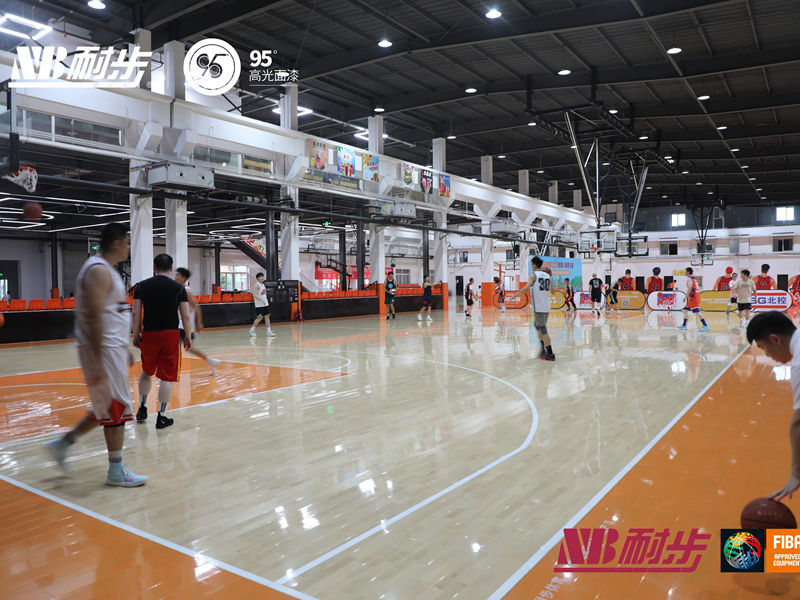
The health and safety of basketball players depend heavily on the surfaces they train and compete on, and indoor basketball court wooden flooring stands out as one of the most athlete-friendly options available for indoor sports spaces. Every time a player leaps for a rebound, lands after a layup, or stops abruptly to defend a perimeter player, their body absorbs a significant amount of force that can lead to both acute injuries and chronic overuse conditions over time. Wooden flooring, when installed with a proper subfloor system, creates a layered structure that disperses this impact force across a wide area rather than allowing it to concentrate directly on a player’s joints. This distributed load significantly reduces the risk of common basketball injuries such as patellar tendonitis, ankle sprains, and stress fractures in the feet and lower legs that often occur when playing on harder, less forgiving surfaces.
The natural properties of wood also make indoor basketball court wooden flooring a more forgiving surface for extended training sessions. Many players spend hours each day running drills, doing conditioning work, and scrimmaging, and the cumulative effect of thousands of impacts over weeks and months of training can lead to persistent pain that sidelines even the most dedicated athletes. A well-constructed wooden floor minimizes this long-term wear by providing consistent shock absorption across every inch of the court, so players do not have to adjust their movement patterns to compensate for uneven or overly hard sections of the playing surface. This consistency means that players can focus entirely on their technique and skill development rather than worrying about how the floor will feel under their feet on any given day.
Indoor basketball court wooden flooring also supports athlete health in less obvious ways. Unlike some synthetic surfaces that can emit small amounts of volatile compounds over time, properly cured and sealed wood creates a non-toxic playing environment that does not expose players to unnecessary airborne irritants. The smooth, non-porous surface of a well-maintained wooden floor is also easy to clean thoroughly, which reduces the buildup of bacteria, mold, and allergens that can circulate through the air in an indoor sports facility. When facilities prioritize regular cleaning and proper ventilation alongside high-quality wooden flooring, they create a space that not only protects players from acute physical injuries but also supports their overall respiratory health and long-term physical well-being, making it easier for athletes to stay healthy and active throughout their entire careers.
Leave a Reply