

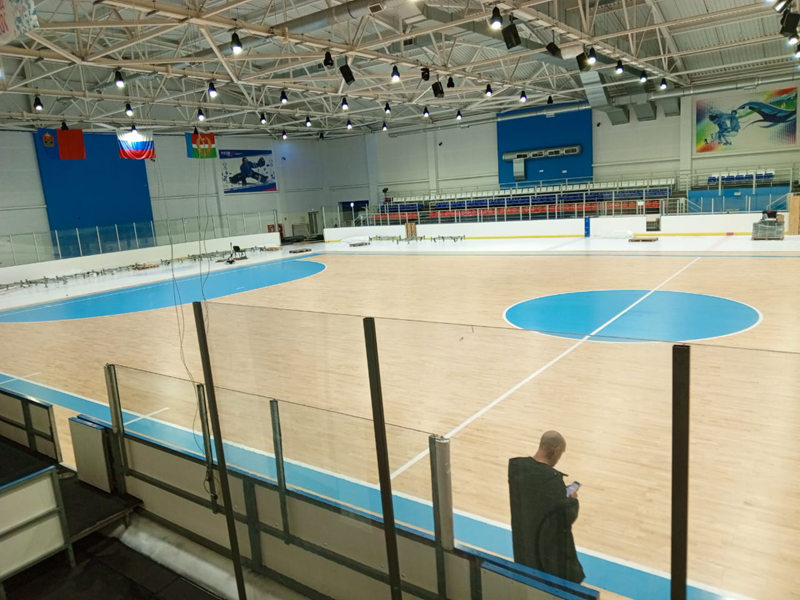
Basketball was invented in 1891, and in the earliest days of the sport, players competed on whatever indoor surfaces were available—often rough wooden gym floors that were not designed specifically for athletic use, or even hard packed dirt in converted community spaces. As the sport grew in popularity through the early 20th century, facilities began to recognize that a dedicated, smooth wooden surface made the game far safer and more enjoyable to play, and purpose-built indoor basketball court wooden flooring started to become a standard feature in school gymnasiums and community recreation centers. These early wooden floors were often made from thick, solid hardwood planks nailed directly to wooden joists above the ground, and while they were a massive improvement over the rough, uneven surfaces that came before them, they lacked the specialized shock absorption that modern players rely on to prevent injuries.
Through the mid-20th century, as organized basketball leagues became more formalized and players began to compete at higher levels of intensity, facility designers started experimenting with new ways to improve the performance of indoor basketball court wooden flooring. They began adding small, resilient spacers between the wood and the underlying substructure to create a slight give underfoot, and they developed new sealing products that made the surface more resistant to scuffs and easier to clean between games. During this era, the characteristic polished wooden basketball floor became an iconic part of the sport’s visual identity, with many schools and small arenas painting their logos and court lines directly onto the wood, creating unique, recognizable spaces that felt deeply connected to the communities that used them.
In the last 30 years, advances in material science and structural engineering have transformed indoor basketball court wooden flooring into the highly specialized, precision-engineered system that exists today. Modern flooring designers now understand exactly how different layers interact to create the ideal balance of shock absorption, vertical deformation, and ball bounce consistency, and they can test every aspect of a new floor system before it is even installed to ensure it meets strict international performance standards. Today’s wooden basketball floors can be customized for everything from small neighborhood recreation rooms to massive professional arenas, and they are designed to adapt to a wide range of environmental conditions, making them a versatile, reliable choice for indoor basketball spaces all over the world. Even as new synthetic flooring technologies have emerged, the timeless, proven performance of wooden flooring has kept it the gold standard for high-quality basketball facilities everywhere.
Leave a Reply