

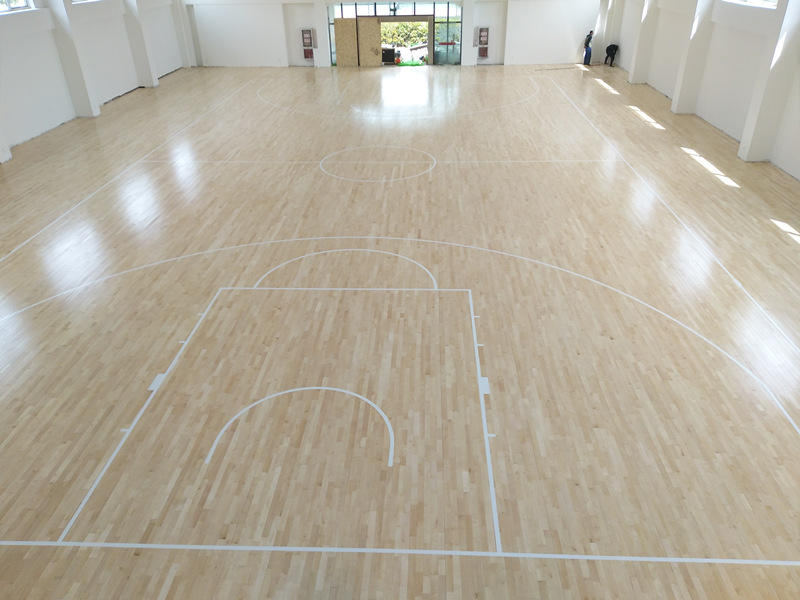
Every year, thousands of athletes suffer from impact-related injuries—stressed knees, sore ankles, shin splints, and lower back pain—that could be prevented or reduced with the right flooring. The science of shock absorption in gymnasium wooden floors is one of the most important yet least understood aspects of sports facility design.
In this article, we'll explore the physics of impact, the biology of injury, and the engineering solutions that modern gymnasium floors provide to keep athletes safe and performing at their best.
Understanding Impact Forces
When an athlete jumps and lands, the force of impact can be 3-5 times their body weight. For a 200-pound basketball player, that means 600-1,000 pounds of force hitting the floor (and being transmitted back through the body) with every jump. Over the course of a game, a basketball player may jump 200-300 times. That's 120,000-300,000 pounds of cumulative impact force on the knees, ankles, and spine.
The floor's job is to absorb as much of that force as possible before it reaches the athlete's body. This is measured as shock absorption—the percentage of impact force that the floor reduces.
A floor with 40% shock absorption reduces a 1,000-pound impact to 600 pounds transmitted to the body. A floor with 20% shock absorption only reduces it to 800 pounds. That 200-pound difference, multiplied by hundreds of jumps per game, adds up to a significant difference in cumulative joint stress over a season—or a career.
The DIN 18032 Standard
In Europe, gymnasium flooring performance is governed by the DIN 18032 standard, which classifies floors into three categories:
- Category K1 (Basic Protection): Shock absorption of at least 35%. Suitable for training and recreational use.
- Category K2 (Standard Protection): Shock absorption of at least 45%. Suitable for school sports and regular competition.
- Category K3 (Enhanced Protection): Shock absorption of at least 53%. Suitable for professional competition and high-impact sports.
In North America, the standards are slightly different but follow similar principles. The Sport Court Technical Manual and ASTM F2772 provide guidelines for shock absorption, ball bounce, and other performance metrics.
How Gymnasium Floors Achieve Shock Absorption
The shock absorption of a gymnasium floor comes from three components working together:
1. The Wood Surface Itself
Solid hardwood has a natural shock-absorbing quality due to its cellular structure. Wood fibers compress slightly under impact, absorbing some energy. However, solid wood alone provides relatively low shock absorption—typically only 5-10%. That's not nearly enough for athletic use.
2. The Subfloor System (Plywood + Adhesive)
The plywood subfloor, when properly installed with flexible adhesive, adds another 5-15% shock absorption. The adhesive acts like a spring, allowing the subfloor to flex slightly under load. This is why the choice of adhesive is so critical—a rigid adhesive eliminates this benefit.
3. The Shock Pad (The Real Hero)
The shock pad is where most of the shock absorption comes from. Modern shock pads are made from various materials:
- Natural Rubber: Excellent shock absorption (can provide 30-50% on its own), good durability, but heavier and more expensive. Natural rubber also has a tendency to compress permanently over time (known as "compression set"), reducing performance after 10-15 years.
- Synthetic Rubber (SBR/EPDM): More consistent performance over time, less compression set, good shock absorption (25-40%). SBR (styrene-butadiene rubber) is the most common choice for gymnasium shock pads.
- Foam (Polyurethane or Polyethylene): Lighter and cheaper than rubber, but lower shock absorption (15-25%) and shorter lifespan. Foam is often used in combination with rubber for multi-layer systems.
- Combination Systems: The best shock pads use multiple layers of different materials—for example, a rubber base layer for shock absorption topped with a foam layer for ball bounce consistency. These hybrid systems can achieve 40-55% shock absorption while maintaining excellent ball bounce.
The Ball Bounce vs. Shock Absorption Trade-Off
Here's the fundamental challenge in gymnasium floor design: you can't maximize both shock absorption and ball bounce at the same time.
A very soft floor (high shock absorption) will absorb too much energy, causing the ball to bounce lower and feel "dead." A very hard floor (high ball bounce) will transmit too much impact force to the athlete's body.
The ideal gymnasium floor finds the sweet spot: enough shock absorption to protect athletes (35-50%) while maintaining a ball bounce of 90% or higher. This is why the engineering of the shock pad is so important—it must be soft enough to absorb impact but firm enough to return energy to the ball.
Think of it like a trampoline: a trampoline with very loose springs will absorb all the energy (great shock absorption, terrible ball bounce), while a trampoline with very tight springs will return all the energy (great ball bounce, terrible shock absorption). The perfect gym floor is like a trampoline with medium-tension springs—the best of both worlds.
Real-World Impact: Injury Prevention Data
Studies have consistently shown that proper gymnasium flooring reduces injury rates:
- A study published in the American Journal of Sports Medicine found that schools with shock-absorbing gym floors had 30-50% fewer lower extremity injuries than schools with hard concrete floors.
- The NBA has reported that the introduction of floating maple floors in the 1990s coincided with a measurable decrease in joint-related injuries among players.
- Research from the University of Calgary found that basketball players on surfaces with 40%+ shock absorption had significantly less knee joint stress than those on surfaces with less than 20% shock absorption.
Factors That Affect Shock Absorption Over Time
Shock absorption isn't static—it changes over the life of the floor:
- Compression set: Shock pads gradually compress permanently under repeated loading, reducing shock absorption by 10-20% over 10-15 years.
- Moisture: Wet shock pads lose shock absorption. A waterlogged rubber pad can lose 30-50% of its shock-absorbing capacity.
- Temperature: Cold temperatures make rubber harder, reducing shock absorption. In unheated gymnasiums, shock absorption can drop significantly in winter.
- Subfloor condition: If the plywood subfloor delaminates or sags, the entire system's shock absorption is compromised.
This is why regular testing and maintenance of gymnasium floors is essential. Most professional facilities test their floors annually using devices like the Clegg Impact Tester or the ASTM F355 drop test.
Innovation in Shock Absorption Technology
The gymnasium flooring industry is constantly innovating:
- Variable-density shock pads: Some manufacturers now produce shock pads with different densities in different zones—softer under the basket (where impact is highest) and firmer in the perimeter areas.
- Recycled rubber shock pads: Made from recycled tires, these pads offer good shock absorption at a lower cost and with excellent sustainability credentials.
- Pneumatic systems: Some high-end facilities use air-filled cushions under the floor that can be adjusted for different sports or activities.
- 3D-printed lattice structures: Experimental shock pads with engineered lattice structures that can be tuned for specific shock absorption and ball bounce characteristics.
Conclusion
Shock absorption is not just a nice-to-have feature of gymnasium flooring—it's a critical performance characteristic that directly affects athlete health, performance, and career longevity. The science is clear: the right floor can reduce impact forces by 40-50%, translating to thousands of pounds of force saved per game, per season, per career.
When specifying gymnasium flooring, don't just look at the wood species and finish. Ask about the shock pad system, its expected performance over time, and how it balances shock absorption with ball bounce. Your athletes' knees will thank you.
Leave a Reply