

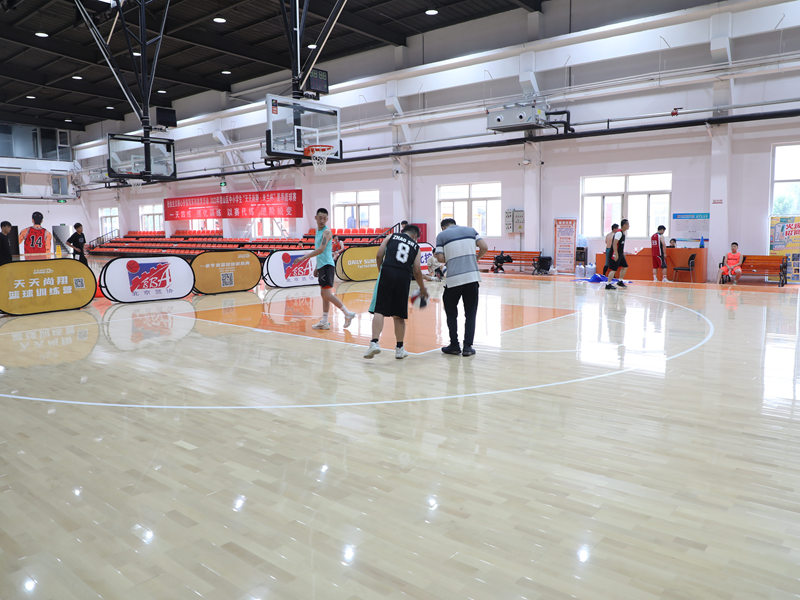
The connection between high-quality indoor basketball court wooden flooring and reduced athlete injury rates has been documented in decades of sports medicine research, and the core reason lies in how wood absorbs and distributes impact forces. Every time a player jumps and lands, their body generates a force equal to several times their own body weight, and that force travels up through their feet, ankles, knees, and hips before reaching their spine. On a hard surface like concrete, almost all of that force is reflected back into the athlete’s body, creating repeated micro-trauma that builds up over months and years of play. Wooden flooring, by contrast, absorbs a significant portion of that impact, dissipating it across the entire surface of the floor instead of sending it straight back into the player’s joints. This does not make the floor feel soft or “bouncy” in a way that disrupts movement—it creates a subtle, forgiving cushion that protects the body without compromising the stability players need to make sharp, controlled movements.
This impact reduction has measurable effects on the most common basketball injuries. Studies of youth leagues that switched from hard non-wood surfaces to properly installed wooden courts found that rates of chronic knee pain, ankle sprains, and lower back strain dropped significantly within the first year. The consistent traction of a well-maintained wooden floor also plays a huge role in injury prevention. When players do not have to worry about unexpected slippery spots or patches of excessive grip, they can move with full confidence, which reduces the awkward, compensatory movements that often lead to twisted ankles or torn ligaments. Unlike some surfaces that can become dangerously slippery when even a small amount of sweat gets on them, properly finished wood maintains its traction reliably even during the most intense, high-sweat games.
The long-term benefits of this injury protection extend far beyond a single season of play. Athletes who spend their youth and early careers training on high-quality wooden courts are far less likely to develop chronic joint issues that can force them to retire early or deal with persistent pain later in life. Many former professional players have noted that the difference between playing on a well-cared-for wooden floor and a low-quality hard surface was noticeable even after just a few games, and that the cumulative effect of decades of play on good wood made a huge difference in how their bodies held up after their careers ended. For leagues, schools, and facilities, investing in proper wooden flooring is not just an investment in better play—it is an investment in the long-term health and well-being of every athlete who steps onto the court.
Leave a Reply