

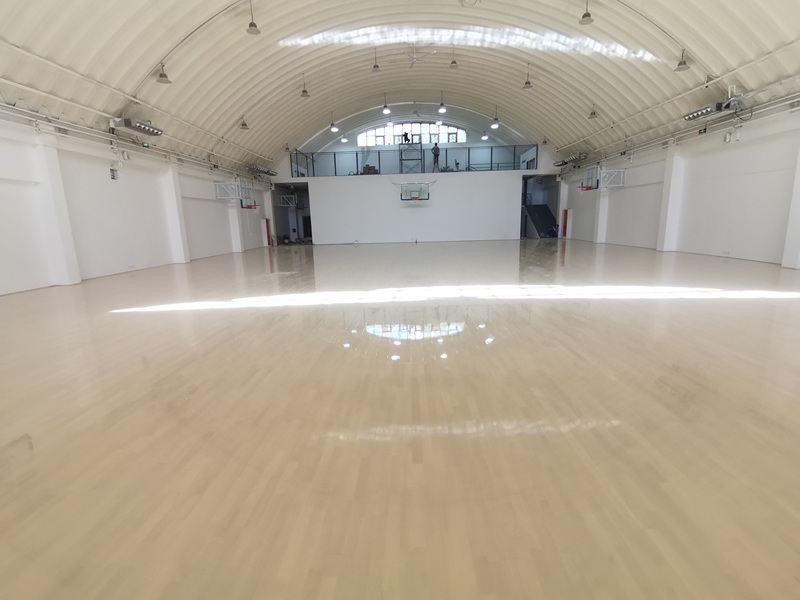
One of the greatest long-term threats to indoor basketball court wooden flooring is uncontrolled moisture, and modern flooring systems are designed with layered, intelligent moisture management strategies that protect the wood through every season of the year. Wood is a naturally hygroscopic material, which means it will absorb or release moisture from the air to reach a balance with the surrounding environment. If the air in the facility becomes too humid during summer months, the wood will swell, and if the air becomes too dry during winter heating seasons, the wood will shrink. Without proper management, these natural changes can create gaps between planks, warped edges, or even permanent structural damage that ruins the playing surface. Modern systems address this by first carefully acclimating every plank to the facility’s typical humidity levels before installation, so the wood starts its life on the court already adjusted to the local environment.
Beneath the visible top layer of wood, a network of engineered gaps and ventilation channels creates constant, gentle air flow under the entire floor. This prevents pockets of trapped moisture from building up against the bottom of the planks, which is one of the most common causes of hidden rot and mold growth that can destroy a floor from the inside out. Many facilities pair this passive ventilation system with subtle adjustments to their building’s HVAC settings, keeping the relative humidity in the court space within a narrow, consistent range that matches the wood’s pre-calibrated moisture content. This does not require extreme energy use—it only needs small, steady adjustments that keep the environment stable, rather than letting humidity swing wildly from one extreme to another as seasons change.
Even small, everyday moisture incidents are accounted for in these management systems. Spilled water from a player’s water bottle, wet shoes tracked in on a rainy day, or condensation from a nearby cold window can all introduce unexpected moisture to the surface. The finish on modern wooden basketball floors is designed to create a protective barrier that prevents liquid from seeping into the wood grain quickly, giving facility staff plenty of time to wipe up spills before any damage can occur. When these moisture management practices are followed consistently, they do not just protect the floor from damage—they ensure that the playing surface remains perfectly flat, level, and consistent for decades, with no unexpected warps, gaps, or raised edges that could create safety hazards for players.
Leave a Reply