

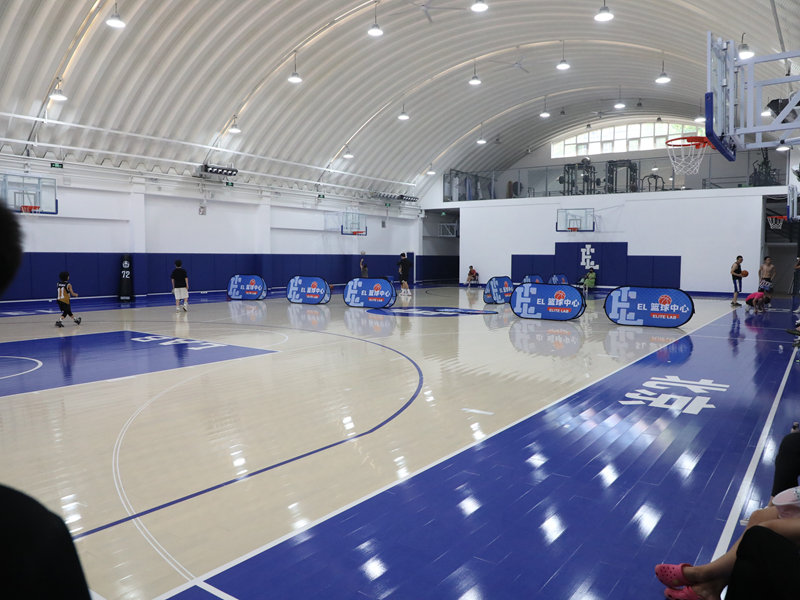
The finish on an indoor basketball court floor is far more than just a cosmetic element. It plays a critical role in protecting the wood, affecting ball bounce, influencing player safety, and determining the overall lifespan of the floor. Understanding the different types of finishes and coating systems available will help you make the best choice for your court.
The two primary types of finishes used on basketball court floors are water-based polyurethane and oil-based polyurethane. Each has distinct characteristics that make it more suitable for certain applications.
Water-based polyurethane finishes have become the industry standard in recent years, and for good reason. They are more environmentally friendly because they contain fewer volatile organic compounds (VOCs) than oil-based finishes. This means they produce less odor during application and curing, which is important in enclosed spaces like gymnasiums. Water-based finishes also dry faster, typically curing in two to four hours between coats, compared to eight to twelve hours for oil-based finishes. This can significantly reduce the overall installation timeline.
In terms of performance, water-based finishes tend to be slightly less slippery than oil-based finishes, which is a safety advantage on a basketball court where players are constantly changing direction. They also tend to yellow less over time, which helps the floor maintain its original appearance. However, water-based finishes can be slightly less durable than oil-based finishes, meaning they may need to be recoated more frequently in high-traffic environments.
Oil-based polyurethane finishes are the traditional choice for basketball court floors. They are known for their deep, rich appearance and their exceptional durability. Oil-based finishes create a harder, more resilient surface that can withstand heavy foot traffic and ball impacts. They also tend to level out better, meaning they produce a smoother finish with fewer brush marks or imperfections.
The downside of oil-based finishes is that they take much longer to cure — sometimes up to twenty-four hours between coats — and they emit strong fumes during application. This requires good ventilation in the gymnasium, and some facilities may need to close the building to the public for several days during the finishing process. Oil-based finishes also tend to yellow over time, which can change the appearance of the floor.
The number of coats applied is another important factor. Most basketball court floors receive between five and eight coats of finish, depending on the type of finish and the desired level of protection and gloss. Each coat must be applied in a thin, even layer, and the floor must be lightly sanded between coats to ensure proper adhesion. The final coat should produce a semi-gloss finish, which is the standard for basketball courts. A high-gloss finish can create too much glare from overhead lights, making it difficult for players to see the ball. A matte finish, on the other hand, can make the floor look dull and can actually increase friction, which may affect ball bounce.
Some facilities opt for a sports-specific coating system instead of traditional polyurethane. These systems are designed specifically for athletic floors and often include additives that enhance ball bounce, reduce friction, and improve durability. They may also include UV inhibitors to prevent yellowing and anti-slip agents to improve player safety. While these systems can be more expensive than standard polyurethane, they offer performance benefits that can be worth the investment for high-level competitive facilities.
The curing process is just as important as the application process. After the final coat of finish is applied, the floor must be allowed to cure for a minimum of forty-eight to seventy-two hours before any activity is allowed on the surface. Some finishes require even longer curing times — up to seven to ten days. Rushing the curing process can result in a soft, tacky finish that will wear away quickly and may never fully harden.
In summary, the finish is a critical component of any indoor basketball court wooden floor. Choose a finish that balances durability, safety, appearance, and environmental considerations. Work with your installer to determine the best finish system for your specific needs, and never compromise on the number of coats or the curing time. A properly finished floor will protect your investment and provide a superior playing surface for years to come.
Leave a Reply