

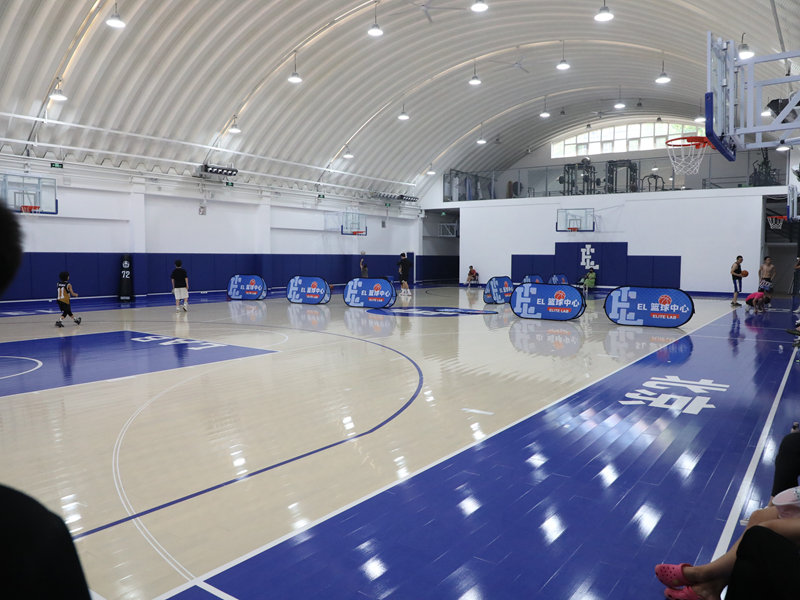
A modern indoor basketball court wood floor is not just a single layer of wood nailed to concrete. It is a carefully assembled multi-layer system, where every single component has a specific job to do. When all these layers work together correctly, they create a playing surface that is far better than any single material could ever be on its own. Starting from the very bottom, the first layer is a thin, durable moisture barrier that sits directly on top of the concrete slab of the gym. This barrier is absolutely critical, because concrete naturally releases small amounts of moisture over time. Without this barrier, that moisture would seep up into the wood, causing it to swell, warp, or develop dangerous mold and mildew that could ruin the entire floor.
Above the moisture barrier, the next layer is a set of supportive pads or rubber isolators. These small, flexible components are spaced out across the entire floor, and they are the secret behind the famous "spring" that a good basketball court floor is known for. These pads compress a controlled amount when weight is applied to the floor, absorbing the shock of jumps and hard landings, and then bounce back to their original shape immediately. Unlike a soft foam that would stay compressed, these pads are engineered to provide exactly the right amount of give, never too much and never too little. They also isolate the movement of the floor, so that the impact of one player landing does not create unwanted vibrations that travel across the entire court and disrupt other players.
On top of those isolator pads, there is a subfloor layer made of strong, stable plywood or specially engineered wooden panels. This layer creates a flat, level base that distributes weight evenly across all the pads beneath it. It also adds extra structural rigidity to the floor, ensuring that there are no soft spots or wobbly areas anywhere on the court. This subfloor layer is where most of the hidden strength of the system lives. It protects the top playing surface from shifting and movement, and it creates a consistent, stable platform that ensures every part of the court performs exactly the same way. No matter how many people are standing on one section of the floor, the subfloor keeps that area firm and supportive.
Finally, the top layer is the solid hardwood playing surface that everyone sees and plays on. These planks are carefully milled to a uniform thickness, laid out in a specific pattern across the court, and secured in place with hidden fasteners that do not leave any exposed nails or screws on the playing surface. Small, precise gaps are left between each plank to give the wood room to expand and contract naturally as the temperature and humidity in the gym change. Once all the planks are in place, the surface is sanded multiple times to create a perfectly smooth, even plane, before being sealed and finished to create the final playing surface. Every single one of these layers works in harmony, and removing or compromising any one of them would ruin the performance of the entire system.
Leave a Reply