

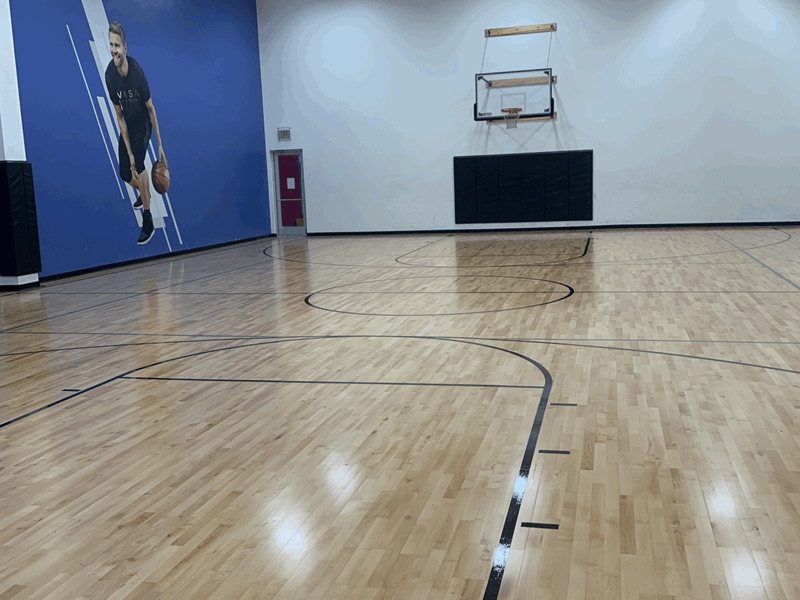
Wood is a natural, living material that responds constantly to changes in its environment. The biggest factor that affects an indoor basketball court wood floor over its lifetime is the level of humidity in the air. When humidity is high, wood absorbs moisture from the air and swells up, making the planks wider. When humidity is low, the wood releases moisture and shrinks, creating small gaps between the planks. If these natural changes are not managed properly, they can cause serious problems: planks can warp, cup, or buckle when they swell too much, or they can crack and split when they dry out too far. This is why proper humidity and temperature control is one of the most important parts of caring for a wood basketball floor.
The ideal environment for an indoor basketball court wood floor is a consistent relative humidity level, kept steady all year round, paired with a moderate, stable temperature. When these conditions are maintained, the wood stays at a consistent moisture content that matches the environment, so it does not need to expand or shrink significantly. This prevents almost all the common issues that can damage a wood floor. The problem comes when gyms have big swings in humidity between seasons. In the summer, when the air outside is hot and humid, moisture can seep into the gym and make the floor swell. In the winter, when the heating system is running constantly, the air inside becomes very dry, pulling moisture out of the wood and making the planks shrink.
Facility managers use a range of tools to keep these conditions stable. High-quality HVAC systems are set to run consistently all year, not just when people are using the gym. Dehumidifiers are used in the summer months to pull excess moisture out of the air, while humidifiers are added in the winter to put just enough moisture back into the dry heated air. Small, accurate moisture meters are placed at multiple points across the court to track the moisture content of the wood itself, so staff can spot small changes before they turn into big problems. Even small adjustments, like making sure the gym is never left with all the windows open on a very humid day, can make a huge difference in keeping the floor healthy.
When humidity is managed correctly, the wood floor not only stays in great physical condition, it also performs better for the players. A wood plank that is at the correct moisture level has the exact right hardness and flexibility that it was designed for. If the wood gets too dry, it becomes harder and more brittle, which makes the floor feel firmer underfoot and reduces its shock absorption ability. If it gets too wet, the wood becomes softer, making the surface feel spongy and increasing the risk that planks will warp or move out of place. By keeping the environment stable, facility managers are not just protecting their investment in the floor; they are also making sure that the court always delivers the exact playing performance that players expect and deserve.
Leave a Reply