

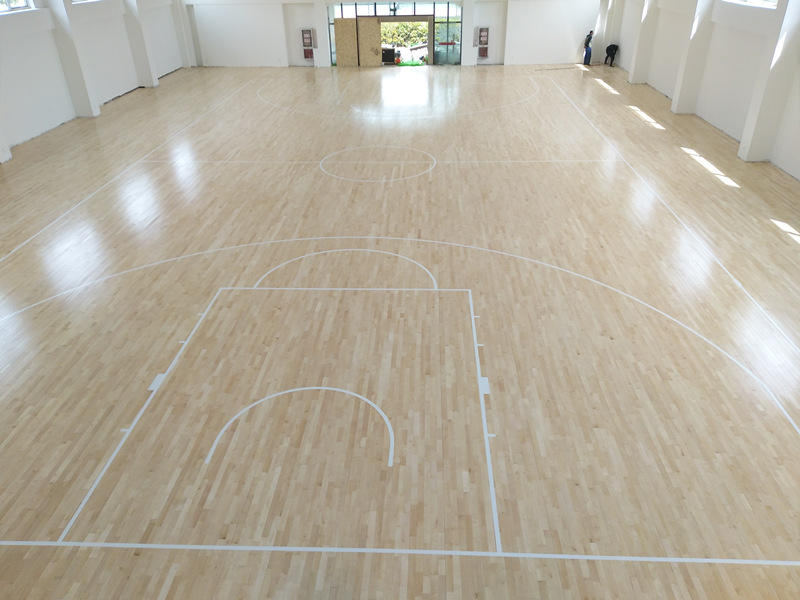
Basketball was originally played on a variety of makeshift surfaces, including packed dirt, concrete, and even rough wooden planks that offered little in the way of consistent performance, but the modern indoor basketball court wooden flooring system emerged through decades of incremental innovation driven by the sport’s growing popularity. In the early 20th century, most indoor courts used simple softwood planks nailed directly to floor joists, which created a hard, uneven surface that often splintered and offered almost no shock absorption. Players in that era frequently suffered foot injuries from catching their shoes in gaps between planks, and the surface would warp dramatically as humidity levels changed throughout the seasons. By the 1940s, court builders began experimenting with layered systems that added a cushioning layer between the wood planks and the subfloor, creating the first generation of surfaces that offered meaningful shock absorption. The 1960s brought the widespread adoption of floating floor designs, where the wood surface was not nailed directly to the underlying structure but instead rested on flexible rubber pads that allowed the entire system to move as a single unit. This innovation solved many of the warping problems that had plagued older wood courts, as the entire surface could expand and contract with humidity changes without creating dangerous bulges or gaps. Over the following decades, refinements to plank sizing, moisture sealing techniques, and subfloor cushioning materials transformed indoor basketball court wooden flooring from a simple practical surface into a highly tuned athletic system that is now recognized as the global standard for competitive basketball play.
The Historical Evolution of Indoor Basketball Court Wooden Flooring Design
Leave a Reply