

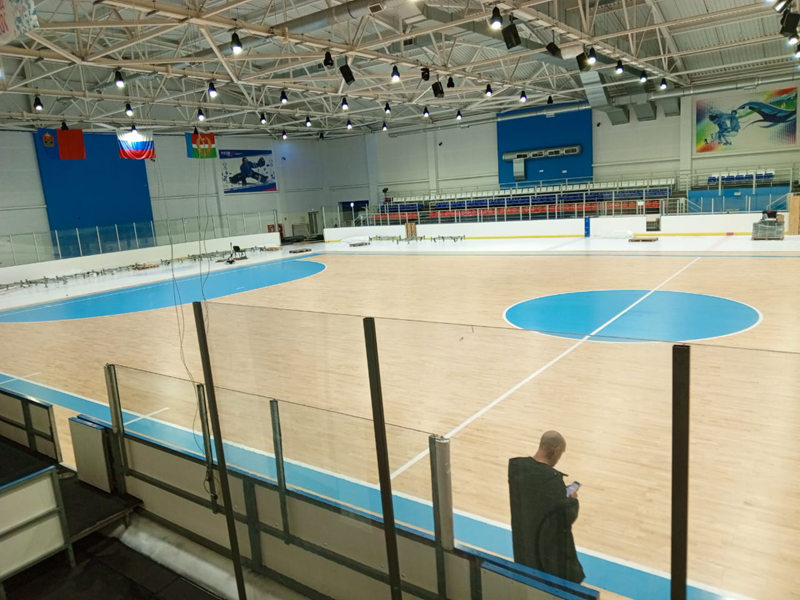
One of the greatest challenges facing any indoor basketball court wooden flooring system is managing the constant battle between the natural hygroscopic properties of wood and the fluctuating humidity levels found in most indoor sports facilities. Wood naturally absorbs moisture from the surrounding air when humidity is high, causing the planks to swell, and releases moisture when the air is dry, causing them to shrink. Without proper moisture management, this cycle can create a host of problems: gaps between planks that catch shoe soles, warped boards that create dangerous tripping hazards, and even cupping where the edges of individual planks rise higher than their centers. The most effective moisture management strategies begin long before the first plank is ever installed, with a thorough assessment of the facility’s underlying concrete slab to test for vapor emission rates. A high-quality vapor barrier installed between the concrete and the wood subfloor prevents ground moisture from seeping up into the wood structure, which is one of the most common causes of irreversible floor damage. Once the floor is installed, maintaining consistent relative humidity levels between 45 and 55 percent year-round is the single most impactful step to preserve the integrity of the indoor basketball court wooden flooring. This often requires integrating dedicated humidification and dehumidification systems into the facility’s HVAC setup, rather than relying solely on standard heating and cooling systems that are not designed to maintain precise moisture levels. Regular moisture testing of both the wood planks and the surrounding air allows facility managers to identify small imbalances before they develop into costly, floor-damaging problems.
Moisture Management Strategies for Long-Lasting Indoor Basketball Court Wooden Flooring
Leave a Reply