

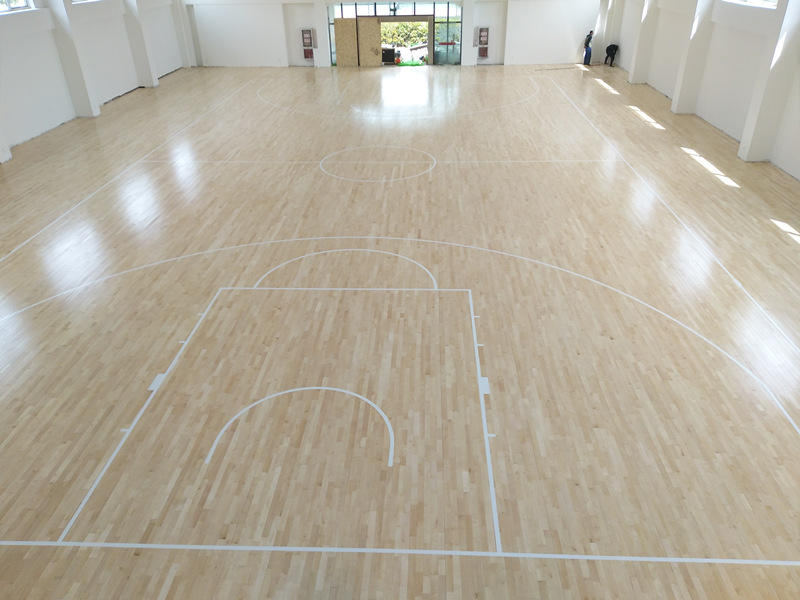
When basketball was first invented in the late 19th century, the concept of a purpose-built indoor basketball court wood flooring did not even exist. Early games were played on all kinds of improvised surfaces: gymnasium floors made of rough, unfinished planks, even polished concrete or packed dirt in some converted community spaces. These early surfaces were inconsistent at best, often full of splinters, uneven spots, and areas that offered no predictable traction for players trying to learn the rules of this brand new sport. As basketball grew in popularity across college campuses and community centers, it quickly became clear that a dedicated, uniform playing surface was needed to make the game safer and more enjoyable for everyone involved.
The first generation of purpose-built indoor basketball court wood flooring emerged in the 1920s and 1930s, as organized leagues began to formalize their facility standards. These early systems used solid hardwood planks nailed directly to wooden joists, creating a flat, stable surface that was far better than anything that had existed before. While these floors lacked the advanced shock absorption features of modern systems, they represented a massive step forward for the sport, creating consistent playing conditions that allowed teams to develop more sophisticated offensive and defensive strategies. Many historic gymnasiums from this era still have their original wood floors intact, and these surfaces are cherished by fans for the timeless character they bring to the game.
Over the second half of the 20th century, indoor basketball court wood flooring evolved dramatically as engineers began to understand more about sports biomechanics and material science. The simple nailed-plank design gave way to layered floating systems that incorporated resilient pads, air gaps, and carefully calibrated substructures to create the perfect balance of hardness and give. Manufacturers started testing different wood species to find the ones that offered the best combination of durability, grain density, and aesthetic appeal, moving away from softer woods that would dent easily under heavy foot traffic. Today's modern indoor basketball court wood flooring systems are the result of more than a century of iterative improvement, refined by millions of hours of competitive play to create a surface that is perfectly tailored to the unique demands of basketball.
Leave a Reply