

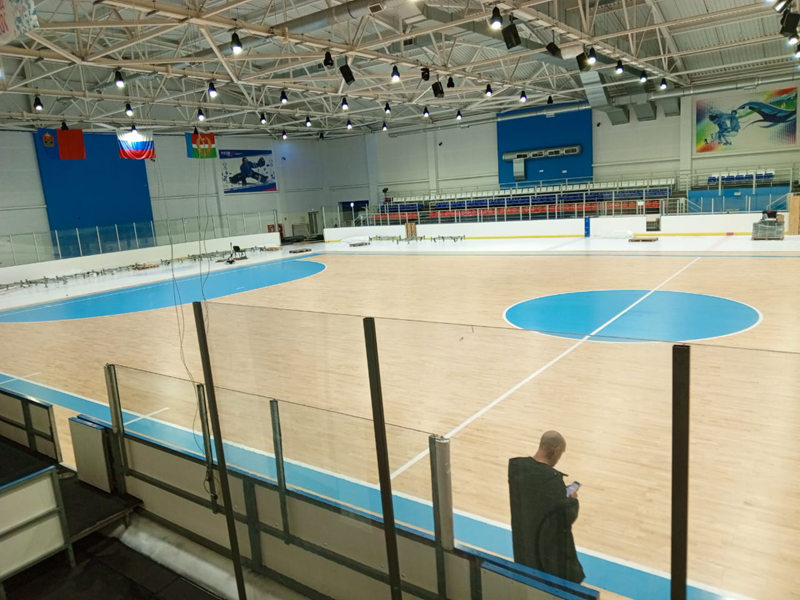
The performance and lifespan of any indoor basketball court wood flooring depend far more on the quality of its installation than many facility owners initially realize. Even the highest grade of hardwood lumber will fail prematurely if it is not installed correctly, with problems like warping, uneven planks, and poor shock absorption appearing within just a few years of completion. The installation process begins long before the first plank is ever laid down, starting with a thorough assessment of the underlying concrete slab that forms the base of most modern indoor sports facilities. Installation teams must test the moisture content of the concrete extensively, because even small amounts of trapped moisture can migrate upward into the wood and cause irreversible damage over time.
Once the base slab has been properly prepared and moisture barriers have been installed, the team begins building the layered subfloor system that sits beneath the visible top layer of indoor basketball court wood flooring. This substructure typically includes a network of sleepers, resilient rubber pads, and cross-braces that create a uniform, slightly elevated surface with controlled flexibility. Every component of this sublayer must be spaced and secured with precise measurements, because even a quarter-inch difference in the height of one support point can create a noticeable dead spot on the playing surface where the floor does not absorb impact correctly. This part of the process requires extreme attention to detail, as the quality of the subfloor will determine how the entire top surface performs for decades after installation.
After the substructure is fully in place and tested for uniform deflection, the actual hardwood planks are laid out in carefully planned patterns that account for the natural expansion and contraction that all wood experiences as humidity levels change. Skilled installers leave tiny, precisely calculated gaps between planks along the edges of the court to give the wood room to move without buckling or warping when summer humidity levels rise. Once all planks are secured, the entire surface goes through multiple stages of sanding, with progressively finer grits to create a perfectly smooth, flat surface that is free of any uneven spots or raised edges. The final finishing process, which adds multiple coats of durable, slip-resistant sealant, is applied in controlled environmental conditions to ensure an even, long-lasting finish that will stand up to thousands of hours of play.
Leave a Reply