

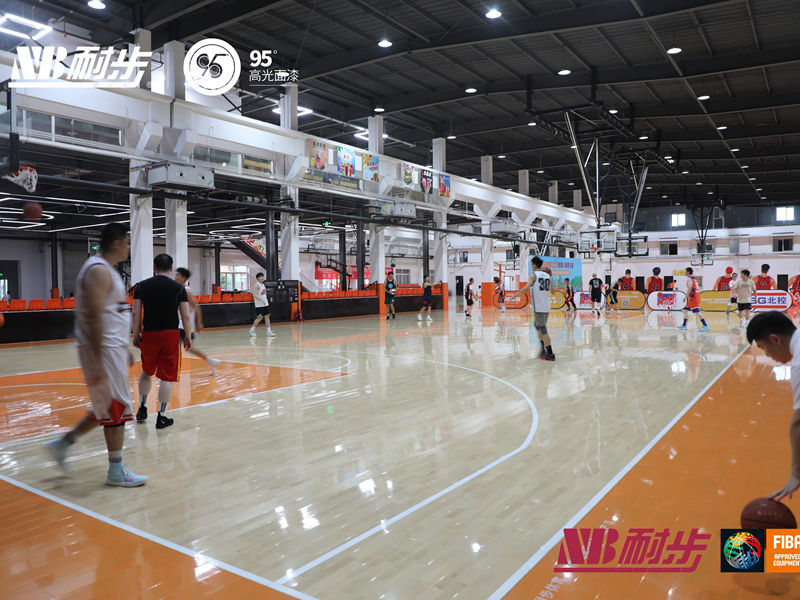
The connection between indoor basketball court wood flooring and long-term athletic health is a topic that has gained increasing attention from sports medicine professionals in recent decades. Basketball is a sport defined by constant, high-impact movement: players perform hundreds of jumps, rapid direction changes, and hard landings over the course of a single game, and these movements are repeated thousands of times across an entire season. Without a properly engineered wood surface beneath them, athletes face dramatically higher risks of developing chronic overuse injuries that can cut their careers short or leave them dealing with persistent pain long after they stop playing competitively.
Indoor basketball court wood flooring systems are designed with layered structures that work together to distribute impact forces evenly across the entire surface. The top layer of solid hardwood provides the responsive, tactile playing surface that players prefer, while the underlying subfloor system includes resilient components that compress slightly under heavy load before returning to their original shape. This controlled deflection means that no single point on the floor absorbs the full brunt of a player's landing; instead, the force spreads out across a wide area, reducing the peak stress that travels upward through the body's kinetic chain. Studies have shown that properly constructed wood flooring can reduce impact forces by up to 30 percent compared to unforgiving concrete surfaces, a difference that adds up to thousands of pounds of avoided stress on joints over the course of a season.
This injury prevention benefit extends far beyond just the professional players who compete on the highest stages. Youth athletes whose bodies are still developing are particularly vulnerable to repetitive stress injuries, and playing on high-quality indoor basketball court wood flooring can help them build fundamental movement patterns without damaging their growing joints. Recreational players who might not have the same level of physical conditioning as elite athletes also benefit greatly, as the forgiving surface reduces the chance that a casual weekend game will leave them sidelined with a sprained ankle or knee strain. Even for officials and coaches who spend hours moving up and down the sidelines, the reduced fatigue that comes from walking on a properly cushioned wood floor makes long tournaments and practice sessions far less physically draining.
Leave a Reply