

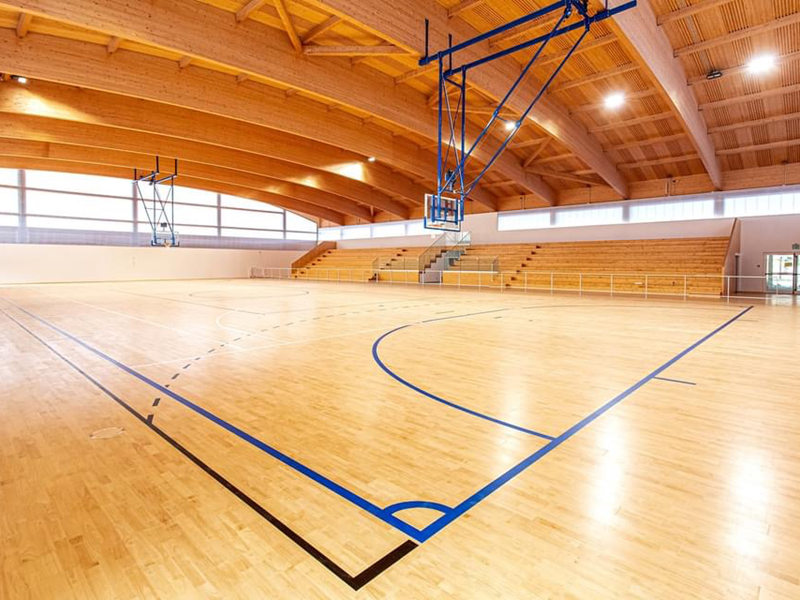
When players step onto an indoor basketball court wooden flooring, every movement they make interacts with a carefully engineered system designed to balance speed, control, and safety. Unlike hard synthetic surfaces that create a rigid connection between foot and ground, wood possesses natural viscoelastic properties that absorb a portion of the impact force generated during jumps, sprints, and sudden directional changes. This absorption does not compromise the responsiveness players rely on; instead, it distributes force across a wider area beneath the surface, reducing the peak stress that travels up through the ankles, knees, and hips during intense play. The grain structure of solid wood creates millions of tiny, interconnected cells that compress slightly under pressure before returning to their original shape, creating a subtle, consistent "give" that feels familiar to players across all skill levels. This natural resilience is further enhanced by the subfloor structure installed beneath the top wood layer, which creates a controlled air gap that allows the entire system to flex uniformly rather than isolating movement to small sections. Over the course of a competitive game, this consistent flex pattern helps maintain a predictable playing experience even when dozens of players are moving across different parts of the court simultaneously. The physics of this system also extend to energy return: when a player pushes off to drive toward the basket, the compressed wood fibers release stored energy to assist that movement rather than absorbing it entirely, creating a surface that feels fast without being unforgiving. This careful balance of absorption and return is why generations of basketball players have reported feeling more connected to the game when playing on properly constructed indoor basketball court wooden flooring.
The Fundamental Physics Behind Indoor Basketball Court Wooden Flooring Performance
Leave a Reply