

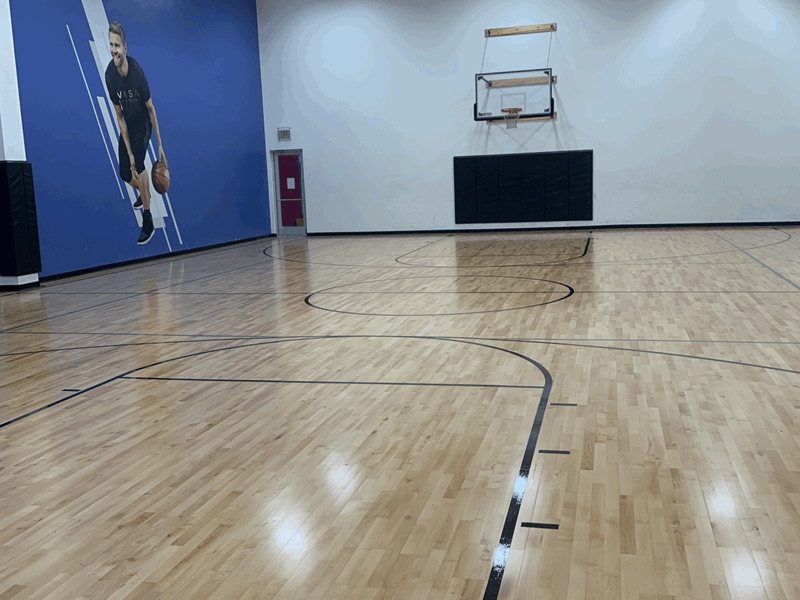
The story of gymnasium flooring is a fascinating journey through industrial innovation, sports science, and materials engineering. What started as simple dirt or sand surfaces has evolved into the sophisticated, multi-layered maple floors we see in NBA arenas today.
Let's take a walk through history and see how gymnasium flooring has changed—and why.
The Early Days: Dirt, Sand, and Cinder (1890s-1920s)
The first indoor gymnasiums, built in the late 19th century, had no specialized flooring at all. Players competed on packed dirt, sand, or cinder (coal ash) surfaces. These surfaces were:
- Cheap: Essentially free
- Dusty: Created clouds of dust that irritated lungs and eyes
- Inconsistent: Hard when dry, muddy when wet
- Dangerous: Ankle injuries were common due to uneven surfaces
The invention of basketball in 1891 by James Naismith actually accelerated flooring innovation. Naismith nailed peach baskets to the walls of a Springfield, Massachusetts YMCA, and his students played on the gymnasium's wooden running track above. The track's smooth, hard surface turned out to be ideal for basketball—much better than the dirt floor below.
This accident led to the first realization that a hard, smooth surface was better for basketball than a soft, uneven one.
The Wooden Plank Era (1920s-1950s)
As basketball grew in popularity—first in colleges, then professionally—gymnasiums began installing proper wooden floors. These early floors were simple:
- 3/4 inch solid wood planks (usually oak or maple)
- Nailed directly to the subfloor
- No shock absorption whatsoever
- Finished with shellac or early varnishes
These floors were a huge improvement over dirt, but they had serious problems:
- Extremely hard: Players suffered from shin splints, knee pain, and stress fractures
- Slippery when polished: Players couldn't stop or change direction
- Noisy: The sound of sneakers on bare wood echoed through the gym
- Unforgiving: Falls caused bruises, cuts, and broken bones
The famous Boston Garden, opened in 1928, had one of the first professional wooden basketball floors. Players complained constantly about the hard surface. Red Auerbach, who would later coach the Celtics to nine championships, famously said the Boston Garden floor was "like playing on concrete."
The Floating Floor Revolution (1950s-1970s)
The breakthrough came in the 1950s when engineers realized that the solution wasn't a different surface material—it was adding a cushion layer underneath the wood.
The concept was simple: instead of nailing wood directly to the subfloor, install a layer of rubber or foam between them. This "floating" system:
- Absorbed impact forces
- Reduced noise
- Allowed the wood to expand and contract without buckling
- Could be installed over existing floors (no demolition needed)
The first commercial floating sports floors appeared in the late 1950s. Companies like Sport Court (founded 1974) and Taraflex pioneered the technology. Initially, the shock pads were thick natural rubber—effective but heavy and expensive.
Meanwhile, the wood itself evolved. Maple replaced oak as the species of choice because:
- It's harder (less denting)
- It's lighter in color (better visibility)
- It has a tighter grain (smoother finish)
- It's more dimensionally stable
The NBA's Boston Celtics installed the first maple parquet floor in the Boston Garden in 1946 (though it was glue-down, not floating). By the 1960s, maple was the standard for professional basketball.
The Parquet Era (1970s-1990s)
The 1970s and 1980s saw the rise of the iconic parquet floor—small maple strips arranged in geometric patterns. The Boston Garden's parquet floor became one of the most famous sports surfaces in history.
Parquet floors were made from 1.5 inch wide strips of maple, arranged in alternating squares (basketweave pattern) or herringbone patterns. They were beautiful, but:
- Expensive: The small strips required more labor to install
- High maintenance: More seams meant more places for dirt to accumulate and finish to wear
- Inconsistent performance: The many seams created slight variations in ball bounce
By the 1990s, the industry was moving toward wider planks (2-2.25 inches) that were easier to install, maintained better, and provided more consistent performance.
The Modern Era: Engineered Performance (1990s-Present)
The modern gymnasium floor is a marvel of engineering. Key developments include:
1990s: The NBA mandates floating maple floors
After years of player complaints about hard surfaces, the NBA required all arenas to install floating maple floors with minimum shock absorption standards. This was a game-changer—suddenly every professional arena needed a proper sports floor.
2000s: UV-cured finishes
Traditional polyurethane finishes took days to cure and emitted VOCs. UV-cured finishes, which harden instantly under ultraviolet light, offered:
- Near-zero VOC emissions
- Extreme durability (7-10 years between recoats vs. 3-5 for polyurethane)
- Consistent, professional appearance
2010s: Performance testing becomes standard
Organizations like the NBA, FIBA, and NCAA began requiring certified performance testing for all new floors. The Clegg impact tester, ASTM F355, and other standardized tests ensured that every floor met minimum shock absorption, ball bounce, and friction requirements.
2020s: Sustainability and smart floors
Today's innovations include:
- FSC-certified wood and recycled rubber shock pads
- Low-VOC adhesives and water-based finishes
- Embedded sensors that monitor moisture, temperature, and performance in real-time
- Modular floor systems that can be disassembled and reused
- Bamboo and cork alternatives gaining market share
What's Next?
The future of gymnasium flooring is exciting:
- 3D-printed shock pads with engineered lattice structures for precise shock absorption tuning
- Self-healing finishes that repair minor scratches automatically
- Carbon-negative floors that sequester more CO2 than they emit
- Smart floors with embedded sensors that alert facility managers to moisture problems, wear patterns, and maintenance needs before they become serious issues
- Bio-engineered wood with enhanced hardness and stability
Conclusion
From dirt floors to smart floors, the evolution of gymnasium flooring mirrors the evolution of sports themselves—always pushing for better performance, safer surfaces, and more sustainable solutions. The maple floors of today are the culmination of 130 years of innovation, and they're better than ever.
The next time you step onto a gymnasium floor, take a moment to appreciate the engineering beneath your feet. That smooth, responsive surface is the result of generations of woodworkers, engineers, and sports scientists working together to create the perfect playing surface.
Leave a Reply