

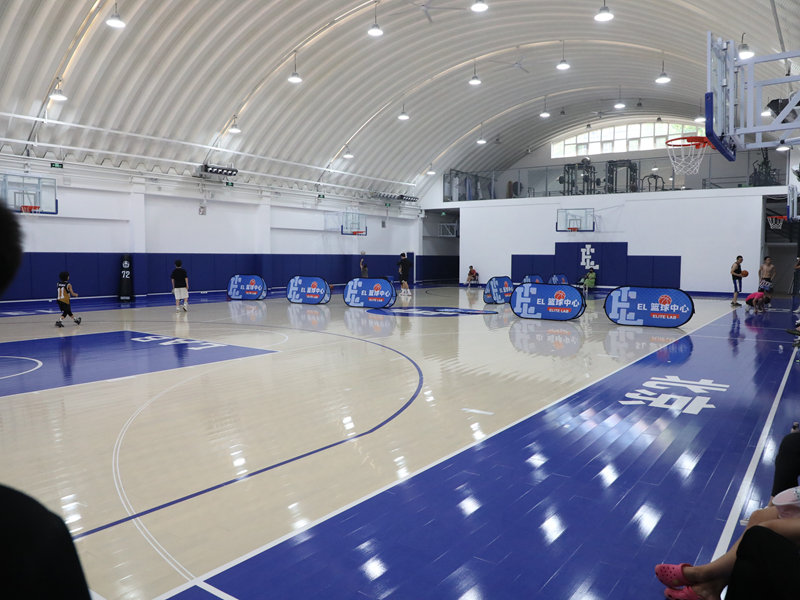
A gymnasium wooden floor is a significant investment—typically 50,000to200,000 or more for a standard facility. With proper maintenance, that investment can provide 30-50 years of excellent service. Without proper maintenance, you could be looking at premature wear, costly repairs, or even complete replacement in 10-15 years.
This comprehensive maintenance manual covers everything you need to know to keep your gymnasium floor in peak condition.
Daily Maintenance (Every Day the Gym is in Use)
Dust Mopping
- Use a wide dust mop (36-48 inches) with a microfiber or treated cotton pad
- Mop in a figure-8 pattern to trap dust rather than pushing it around
- Dust mop at least once per day, twice on high-traffic days
- Change mop pads when they become saturated (typically every 2-3 days)
Spot Cleaning
- Clean spills immediately—never let liquid sit on the floor
- Use a damp (not wet) mop for water-based spills
- For sweaty areas under baskets, use a disinfectant cleaner approved for hardwood floors
- Avoid using excessive water—wood and water don't mix
Equipment Movement
- Use protective floor pads under all movable equipment (bleachers, carts, scorer's tables)
- Never drag heavy equipment across the floor—always lift and move
- Replace worn floor protection pads before they scratch the finish
Weekly Maintenance
Wet Mopping
- Use a pH-neutral hardwood floor cleaner (pH 7-9)
- Mix according to manufacturer instructions—never use full-strength cleaner
- Use a flat mop or microfiber mop, not a string mop (string mops can leave fibers that dull the finish)
- Mop in the direction of the wood grain
- Use as little water as possible—the mop should be damp, not dripping
- Dry the floor immediately with a clean dry mop if excess water is used
Sweeping High-Traffic Areas
- Use a soft-bristle push broom or a microfiber dust mop in entryways and high-traffic zones
- Pay special attention to areas under basketball hoops where shoe marks accumulate
Inspection
- Walk the entire floor looking for:
- Scuff marks or scratches
- Areas where the finish is wearing thin
- Loose or squeaking planks
- Moisture damage (cupping, discoloration)
- Debris or objects that could scratch the floor
Monthly Maintenance
Deep Cleaning
- Use a commercial-grade hardwood floor cleaner with a low-speed buffer (500-1000 RPM)
- Do NOT use high-speed buffers (1750+ RPM)—they generate heat that can damage the finish
- Apply cleaner, let it dwell for 1-2 minutes, then buff dry
- Focus on high-traffic areas and areas under baskets
Finish Inspection
- Shine a flashlight at a low angle across the floor surface
- Look for dull spots, thin areas, or scratches
- Mark any areas that need touch-up
Expansion Gap Check
- Walk around the perimeter of the gym
- Check that the 3/8 inch expansion gap is maintained
- If you see planks buckling or crowding against walls, there may be a moisture problem
Annual Maintenance
Professional Recoating
- Every 3-5 years (polyurethane) or 7-10 years (UV-cured), the floor needs a fresh coat of finish
- This is typically done by a professional flooring contractor
- The process involves:
- Light sanding (120-150 grit) to scuff the existing finish
- Thorough cleaning and vacuuming
- Application of 2-3 coats of finish
- Curing time (24-48 hours before use)
Performance Testing
- Hire a certified testing company to measure:
- Shock absorption (Clegg impact tester)
- Ball bounce (ASTM F2398)
- Surface friction (ASTM F2508)
- Flatness (straightedge test)
- Compare results to original specifications
- If performance has degraded significantly, consider a full sanding and refinishing
Subfloor Inspection
- If accessible, inspect the subfloor and shock pad for:
- Moisture damage
- Delamination
- Compression set in shock pad
- Pest damage (termites, carpenter ants)
Seasonal Maintenance
Winter (Heating Season)
- This is the most challenging season for wood floors
- Indoor humidity often drops below 30% in heated buildings
- Low humidity causes wood to shrink, leading to gaps between planks
- Solution: Use humidifiers to maintain 40-60% relative humidity
- Avoid using portable space heaters that blow hot air directly on the floor
Summer (Cooling Season)
- Air conditioning removes moisture from the air
- Same risks as winter—low humidity causes shrinking
- Solution: Same as winter—humidify to 40-60% RH
Spring and Fall (Transition Seasons)
- Outdoor humidity fluctuates rapidly
- HVAC systems may not keep up with moisture changes
- Solution: Monitor humidity daily with a hygrometer; adjust HVAC and humidifiers as needed
Common Problems and Solutions
Problem: Scratches and Scuff Marks
- Light scratches: Can be buffed out with a recoat
- Deep scratches: May require spot sanding and touch-up
- Prevention: Floor pads on all equipment, no outside shoes on the floor
Problem: Dull Finish
- Cause: Foot traffic, dirt, improper cleaning
- Solution: Recoat with fresh polyurethane
- Prevention: Daily dust mopping, proper pH-neutral cleaners
Problem: Squeaking Floors
- Cause: Planks rubbing against each other or subfloor
- Solution: Inject flooring adhesive or specialized squeak-eliminating compound between planks
- Prevention: Proper installation with adequate adhesive coverage
Problem: Cupping (edges of planks higher than center)
- Cause: Moisture imbalance—one side of plank exposed to more moisture than the other
- Solution: Correct the moisture source; if severe, planks may need replacement
- Prevention: Maintain consistent humidity, fix leaks immediately, proper vapor barrier
Problem: Crowning (center of plank higher than edges)
- Cause: Excess moisture on top surface
- Solution: Improve ventilation, reduce water usage, check for roof leaks
- Prevention: Proper drainage, no standing water, adequate ventilation
Problem: Gapping (wide gaps between planks)
- Cause: Low humidity causing wood to shrink
- Solution: Humidify the space; gaps may close when humidity increases
- Prevention: Maintain 40-60% RH year-round
Problem: Finish Peeling or Flaking
- Cause: Moisture under the finish, improper surface preparation, incompatible products
- Solution: Strip and refinish; address moisture issue first
- Prevention: Proper subfloor moisture testing, compatible adhesive/finish systems
Cleaning Products: What to Use and What to Avoid
SAFE to Use:
- pH-neutral hardwood floor cleaners
- Microfiber mops
- Soft-bristle brooms
- Dry dust mops
- Approved sports floor cleaners (like Sport Court Cleaner)
NEVER Use:
- Vinegar, ammonia, or bleach (damages finish and wood)
- Wax or oil-based cleaners (builds up and makes floor slippery)
- Steel wool or abrasive pads (scratches the surface)
- High-speed buffers (generates damaging heat)
- Steam cleaners (excessive moisture)
- Wet-dry vacuums with beater bars (can scratch and gouge)
Budgeting for Maintenance
Plan for these annual costs:
| Item | Frequency | Estimated Cost (5,000 sq ft gym) |
|---|---|---|
| Daily dust mopping supplies | Ongoing | $500-1,000/year |
| Weekly cleaning supplies | Ongoing | $1,000-2,000/year |
| Professional recoating | Every 3-5 years | $3,000-8,000 |
| Full sanding and refinishing | Every 10-15 years | $8,000-15,000 |
| Performance testing | Annually | $500-1,500 |
| Humidifier operation | Winter months | $500-1,000/year |
| Total annual average | $3,000-6,000/year |
Compared to the cost of replacing a synthetic floor every 8-12 years ($30,000-60,000), the annual maintenance cost of a wood floor is very reasonable—especially when you consider the superior performance, aesthetics, and longevity.
Conclusion
Maintaining a gymnasium wooden floor is not difficult—it just requires consistency and attention to detail. The daily and weekly tasks take minimal time and cost very little. The key is catching problems early (moisture issues, finish wear) before they become expensive repairs.
Think of your gymnasium floor like a car: regular oil changes and tire rotations keep it running smoothly for decades. Neglect it, and you'll be paying for a rebuild much sooner than necessary.
Leave a Reply