

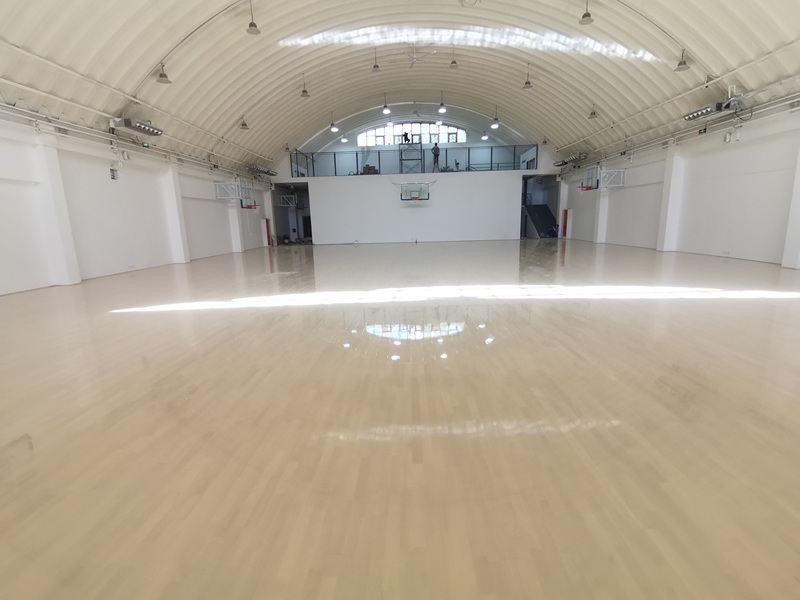
In an era of growing environmental awareness, the sustainability of building materials has become a top priority for architects, facility managers, and sports organizations. Indoor sports wooden flooring stands out as one of the most environmentally friendly flooring options available. In this article, we explore the environmental credentials of sports wooden flooring and why it should be the first choice for green building projects.
Wood: A Renewable Resource
Unlike synthetic flooring materials derived from petroleum (PVC, polypropylene), wood is a natural, renewable resource. Trees can be harvested and regrown, making wood a sustainable choice when managed responsibly.
Sustainable Forestry Certifications
When purchasing sports wooden flooring, look for certifications that ensure the wood comes from responsibly managed forests:
- FSC (Forest Stewardship Council): The gold standard for sustainable forestry. FSC-certified forests are managed to protect biodiversity, water resources, and the rights of indigenous peoples.
- PEFC (Programme for the Endorsement of Forest Certification): Another internationally recognized certification system.
- SFI (Sustainable Forestry Initiative): Popular in North America.
Over 70% of the world's commercially harvested wood comes from certified forests, and most major sports flooring manufacturers offer FSC or PEFC-certified options.
Carbon Sequestration
One of the most compelling environmental benefits of wood flooring is carbon sequestration. Trees absorb CO2 from the atmosphere as they grow, and that carbon remains stored in the wood for the life of the product.
- A single mature hardwood tree stores approximately 1 ton of CO2.
- A standard basketball court (approximately 4,700 sq ft) made of maple stores approximately 2-3 tons of CO2.
- Over its lifetime, a sports wooden floor continues to sequester carbon, unlike synthetic floors that release carbon during production and disposal.
Low Embodied Energy
Embodied energy is the total energy required to produce a material, from raw material extraction to manufacturing and transportation.
| Material | Embodied Energy (MJ/kg) |
|---|---|
| Hardwood Flooring | 2.5-5.0 |
| PVC Flooring | 55-80 |
| Polypropylene | 70-100 |
| Rubber Flooring | 25-40 |
| Concrete | 1.0-1.5 |
Sports wooden flooring has dramatically lower embodied energy than any synthetic alternative. This means fewer greenhouse gas emissions are produced during manufacturing.
Low VOC Emissions
Volatile organic compounds (VOCs) are chemicals that off-gas from building materials and contribute to indoor air pollution and health problems.
Modern sports wooden flooring finishes are water-based and have very low VOC emissions:
- Traditional solvent-based finishes: 300-500 g/L VOC
- Modern water-based sports lacquers: 50-150 g/L VOC
- Zero-VOC options: <5 g/L VOC (available from several manufacturers)
In contrast, PVC flooring can off-gas phthalates, formaldehyde, and other harmful chemicals for years after installation.
End-of-Life: Biodegradable and Recyclable
At the end of its useful life, sports wooden flooring can be:
- Refinished and reused: The top layer can be sanded and refinished 6-10 times.
- Repurposed: Old planks can be used for furniture, wall paneling, or other projects.
- Composted or burned for energy: Wood is biodegradable and can be used as biomass fuel.
- Recycled: Some manufacturers offer take-back programs for old flooring.
Synthetic floors, on the other hand, end up in landfills where they can take hundreds of years to decompose. PVC flooring is particularly problematic, as it releases toxic dioxins when burned.
Comparison: Sports Hardwood vs. Synthetic — Environmental Scorecard
| Factor | Sports Hardwood | PVC | PP Tiles | Rubber |
|---|---|---|---|---|
| Renewable Resource | ✅ Yes | ❌ No | ❌ No | ⚠️ Partially |
| Carbon Sequestration | ✅ Yes | ❌ No | ❌ No | ❌ No |
| Low Embodied Energy | ✅ Yes | ❌ No | ❌ No | ⚠️ Moderate |
| Low VOC | ✅ Yes | ❌ No | ⚠️ Moderate | ✅ Yes |
| Recyclable/Biodegradable | ✅ Yes | ❌ No | ⚠️ Partially | ⚠️ Partially |
| FSC/PEFC Available | ✅ Yes | ❌ No | ❌ No | ⚠️ Rarely |
| Overall Score | A+ | D- | C- | B- |
Green Building Certifications
Indoor sports wooden flooring contributes to several green building certification systems:
- LEED (Leadership in Energy and Environmental Design): Wood flooring can earn points under Materials & Resources (MR) credits for using rapidly renewable materials, recycled content, and regional materials.
- BREEAM (Building Research Establishment Environmental Assessment Method): Similar credits are available for responsibly sourced wood.
- WELL Building Standard: Low-VOC wood flooring contributes to the Air and Materials concepts.
The Role of Bamboo and Cork
In addition to traditional hardwood, two other natural materials are gaining popularity in sports flooring:
Bamboo
- Grows 3-5 feet per day (the fastest-growing plant on Earth)
- Harvested every 3-5 years (vs. 20-50 years for trees)
- Strand-woven bamboo has hardness comparable to maple (1,380-1,500 Janka)
- FSC-certified bamboo is widely available
Cork
- Harvested from the bark of cork oak trees without cutting down the tree
- Excellent shock absorption and thermal insulation
- Used primarily as underlayment, but also as a top layer in some applications
Conclusion
Indoor sports wooden flooring is one of the most environmentally responsible flooring choices available. From its renewable sourcing and carbon sequestration to its low embodied energy and end-of-life recyclability, wood flooring outperforms synthetic alternatives in every environmental metric. For facilities pursuing green building certifications or simply committed to sustainability, sports wooden flooring is the clear choice.
Leave a Reply