

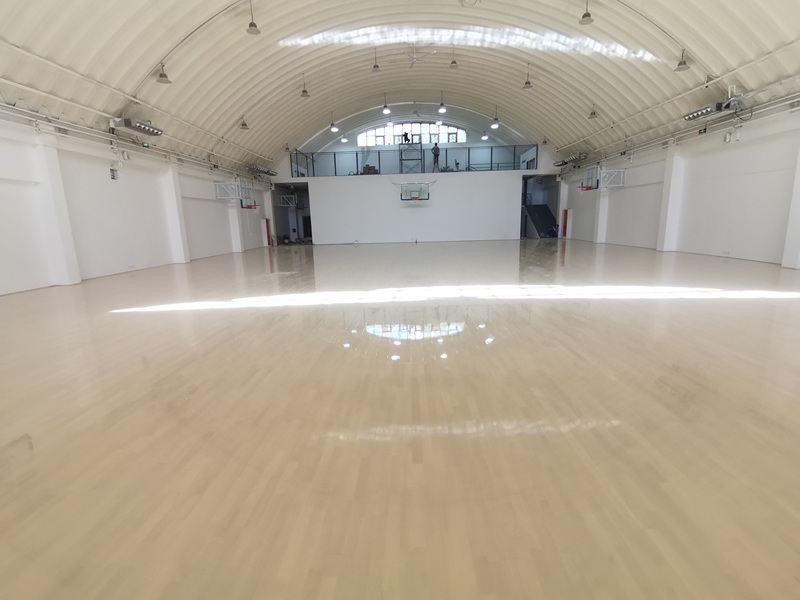
Sustainability is no longer a nice-to-have feature. It is an expectation. Facility managers, school administrators, and sports organizations are increasingly looking for flooring solutions that minimize environmental impact without compromising performance. Interlocking wooden flooring for indoor basketball courts checks many of the boxes when it comes to environmental responsibility, and this article explores why.
The first environmental benefit is material efficiency. Interlocking panels are manufactured with precision, which means there is very little waste during production. Every piece of wood is cut to exact specifications, and offcuts are typically recycled or repurposed. Compare this to traditional hardwood installation, where boards must be cut to length on site, generating significant sawdust and waste. The modular nature of interlocking flooring also means that you order exactly the amount you need, with minimal excess.
The second benefit is the use of wood from sustainable sources. Many manufacturers of interlocking wooden flooring source their hardwood from certified sustainable forests. These forests are managed to ensure that trees are harvested at a rate that allows the forest to regenerate, maintaining biodiversity and ecosystem health. When you choose interlocking flooring from a responsible supplier, you can be confident that the wood in your court comes from a source that respects the environment.
The third benefit is longevity. A well-maintained interlocking wooden floor can last for many years, which means fewer replacements and less material consumed over time. Because individual panels can be replaced without disturbing the rest of the floor, the overall lifespan of the court is extended. This reduces the frequency of manufacturing new flooring and the associated environmental costs of production, transportation, and installation.
The fourth benefit is recyclability. At the end of its useful life, interlocking wooden flooring can be disassembled and the components separated for recycling. The wood can be reclaimed or composted, the plastic base can be recycled, and the metal clips can be recovered. This closed-loop approach is far more environmentally friendly than sending an entire traditional hardwood floor to a landfill.
The fifth benefit is reduced transportation impact. Because interlocking panels are lightweight compared to solid hardwood planks, they require less fuel to transport. Additionally, the flat-pack design means that more panels can be shipped in a single truckload, further reducing the carbon footprint per square meter of flooring.
The sixth benefit is the elimination of adhesives and chemicals. Traditional hardwood installation often requires glue, solvents, and finishing chemicals that can release volatile organic compounds into the air. Interlocking flooring requires none of these. The panels simply click together, and the finish is typically a water-based polyurethane that is low in VOCs. This means better indoor air quality for the players and spectators who use the court.
In an era where every choice is scrutinized for its environmental impact, interlocking wooden flooring offers a responsible, high-performance solution that aligns with the values of modern sports facilities.
Leave a Reply