

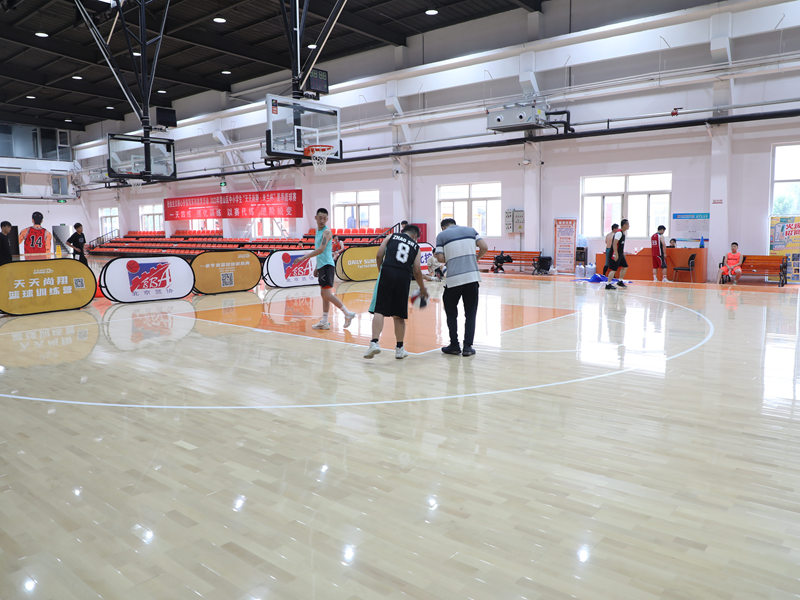
Shock absorption is arguably the single most important performance feature of any indoor basketball court floor. The game of basketball involves constant jumping, landing, and rapid directional changes, all of which generate significant impact forces on the player's body. A floor with inadequate shock absorption can contribute to a range of injuries, from shin splints and stress fractures to knee and ankle damage. Interlocking wooden flooring addresses this challenge with a sophisticated multi-layer design that delivers excellent shock absorption without sacrificing playing performance.
To understand how shock absorption works in interlocking flooring, you need to look at the structure of a single panel. The top layer is real hardwood, typically between 18 and 22 millimeters thick. This layer provides the firm, responsive surface that players expect. Beneath the hardwood is the core layer, which is the heart of the shock absorption system. This layer is made from one of several materials, each with different properties.
Polypropylene honeycomb is one of the most common core materials. It consists of a network of tiny cells that compress under impact, absorbing energy, and then spring back to their original shape. This provides consistent, repeatable shock absorption that does not degrade significantly over time. Rubber is another option, offering a softer feel and slightly higher shock absorption, though it may provide a bit less ball response. Some systems use a combination of both materials to achieve a customized balance.
The effectiveness of shock absorption is measured using a standard test called the DIN test, which drops a weight from a specified height onto the floor and measures the force that is returned. A lower returned force indicates better shock absorption. High-quality interlocking wooden flooring for basketball courts typically achieves a DIN value in the range that meets or exceeds the requirements of international basketball federations.
It is important to note that shock absorption and ball bounce are related but not the same thing. A floor can have excellent shock absorption but poor ball bounce if the surface is too soft. The genius of interlocking wooden flooring is that it separates these two functions. The hardwood surface handles ball bounce, while the core layer handles shock absorption. This means you get the best of both worlds: a lively ball response and a floor that protects your joints.
The thickness of the core layer also plays a role. Thicker cores generally provide more shock absorption, but they also raise the height of the floor, which may not be desirable in all situations. Most interlocking systems offer a range of core thicknesses, allowing you to select the level of cushioning that best suits your needs. For competitive play, a thinner core with firmer response may be preferred. For recreational or training environments, a thicker core with more cushioning may be the better choice.
In conclusion, shock absorption in interlocking wooden flooring is not an afterthought. It is a core design principle that is engineered into every panel from the ground up. Whether you are a professional athlete or a weekend player, this feature is working quietly beneath your feet to keep you safe and performing at your best.
Leave a Reply