

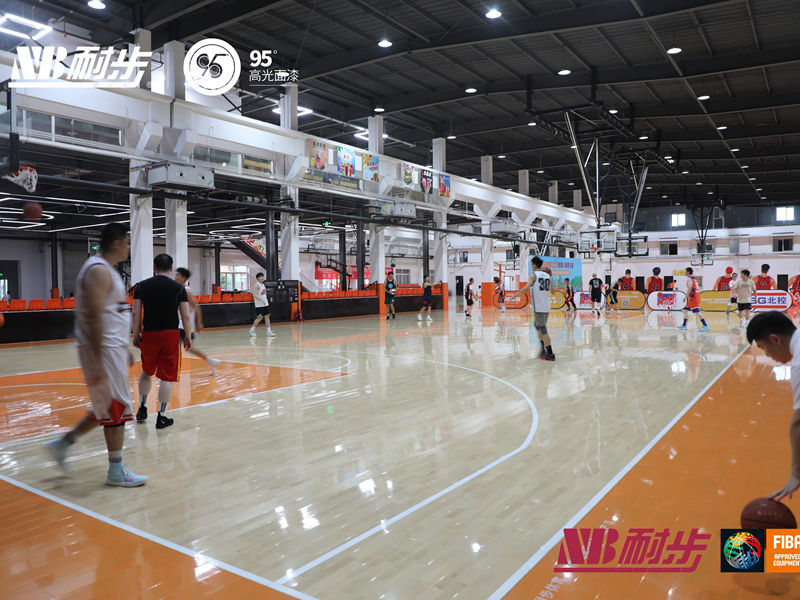
Indoor basketball court wood flooring is far more than a decorative surface for competitive venues; it is a foundational element that directly shapes every movement, decision, and outcome on the court. For players at all levels, from youth recreational leagues to professional elite competitions, the characteristics of the wood flooring determine how they push off the ground during a fast break, how they land after a high-flying dunk, and how they maintain balance while executing a sharp crossover dribble. Unlike hard synthetic surfaces that offer little to no give underfoot, properly constructed indoor basketball court wood flooring possesses a carefully calibrated level of shock absorption that reduces the impact transmitted through the ankles, knees, and hips during intense play. This shock absorption does not come at the cost of stability, however—top-tier wood flooring systems are engineered to strike a precise balance between softness for injury prevention and firmness for responsive movement, ensuring that players do not feel like they are sinking into a spongy surface when they make explosive directional changes.
The surface texture of indoor basketball court wood flooring also plays a critical role in performance. When finished with the right amount of traction, the wood allows basketball shoes to grip the surface consistently, eliminating the slippery spots that can cause unexpected slips during a critical play, while also avoiding the overly aggressive friction that can catch the sole of a shoe and lead to twisted ankles when a player tries to pivot quickly. This balance of traction is not a permanent state, of course; it evolves over time as the wood is worn down by thousands of hours of play, which is why regular maintenance routines that clean and refresh the finish are essential to preserving the flooring’s performance characteristics. Even small variations in the quality of the wood’s installation can create noticeable differences in how the court plays: a slightly uneven plank, a gap that opens up between two sections, or a weak spot in the subfloor can create a dead zone where players feel a distinct lack of responsiveness, breaking their rhythm and increasing their risk of injury.
Beyond physical performance, indoor basketball court wood flooring also impacts the psychological state of players. A well-maintained, smooth, and consistent wood surface sends a clear signal that the venue is designed for serious, high-quality play, which helps players get into a competitive mindset the moment they step onto the court. The natural warmth of wood, compared to the cold, artificial feel of other flooring materials, creates a more welcoming atmosphere that encourages players to stay on the court longer, practice harder, and enjoy their time playing the sport. This combination of physical performance benefits and psychological comfort makes indoor basketball court wood flooring an irreplaceable component of any high-quality basketball venue, one that directly contributes to better play, fewer injuries, and a more positive experience for everyone who steps onto the court.
Leave a Reply