

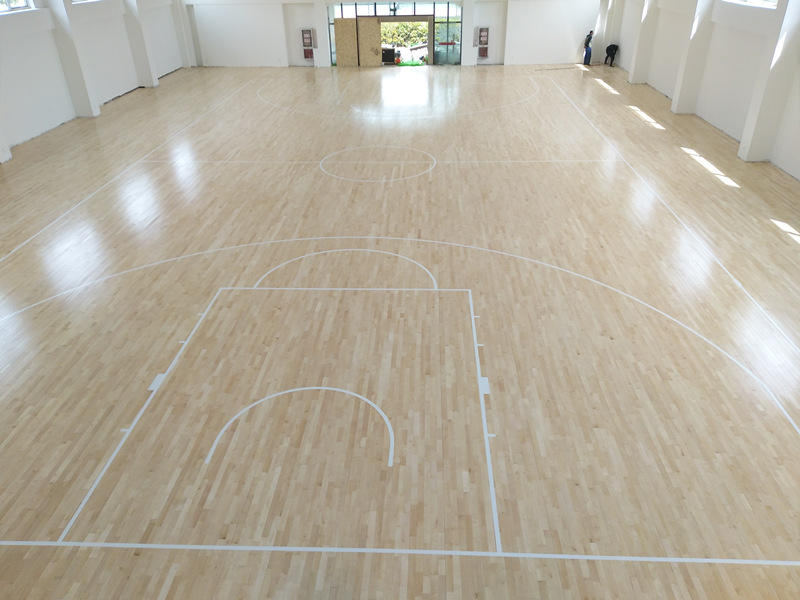
The long-term health of basketball players’ joints is one of the most important, yet often overlooked, considerations when selecting materials for a competitive venue, and indoor basketball court wood flooring stands out as one of the most effective surfaces for protecting athletes from chronic overuse injuries. Basketball is a sport defined by constant high-impact movement: players jump hundreds of times over the course of a single game, land from heights of several feet, make sudden stops at full sprint, and execute repeated hard pivots that place enormous stress on the knee cartilage, ankle ligaments, and spinal vertebrae. Over months and years of regular play, the cumulative impact of these movements on a hard, unforgiving surface can lead to chronic conditions like patellar tendinitis, osteoarthritis, and chronic ankle instability that can end a player’s career prematurely. Indoor basketball court wood flooring is specifically engineered to mitigate this risk by absorbing a significant portion of the impact force that would otherwise be transferred directly into the athlete’s body.
This impact absorption works through a layered system that extends far beyond the visible top layer of wood planks. Beneath the finished wood surface, a network of supportive structures—including resilient pads, adjustable sleepers, and air gaps—work together to compress slightly when a player lands, dissipating the force of the impact across the entire flooring system rather than letting it concentrate on the small area of contact between the player’s shoe and the floor. Studies of athletic surfaces have shown that properly installed wood basketball flooring can reduce peak impact force by up to 50% compared to bare concrete, a difference that adds up to thousands of fewer pounds of stress on a player’s joints over the course of a single season. What makes indoor basketball court wood flooring uniquely effective, however, is that this energy absorption is paired with controlled energy return: when the floor compresses, it pushes back gently to support the player’s next movement, rather than absorbing all the force and leaving the player feeling heavy and unresponsive.
The benefits of this joint protection extend to players of all ages and skill levels. For young athletes whose bones and connective tissue are still developing, a forgiving wood surface reduces the risk of growth plate injuries and long-term damage that can occur when young bodies are repeatedly exposed to hard surfaces. For veteran players who have already accumulated years of wear and tear on their joints, the reduced impact of indoor basketball court wood flooring allows them to continue playing the sport they love without exacerbating existing chronic pain. Even for recreational players who only play a few times a week, the difference between playing on a wood floor and a hard synthetic floor is noticeable in the days after a game: fewer sore knees, less lower back pain, and a much lower chance of waking up with stiff ankles that make walking difficult. This focus on long-term athlete health is one of the primary reasons that top competitive leagues around the world have relied on indoor basketball court wood flooring for decades, recognizing that protecting players’ bodies is just as important as creating a surface that supports high-level performance.
Leave a Reply