

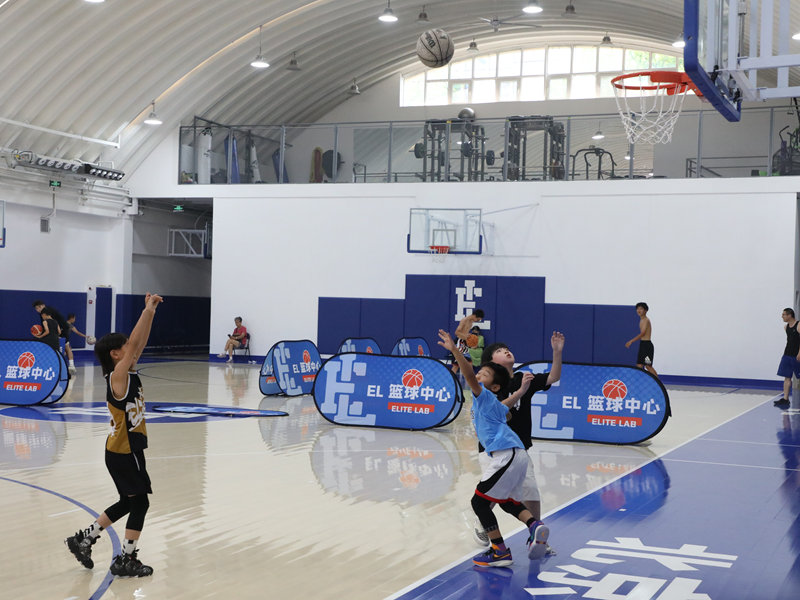
Refinishing an indoor basketball court hardwood floor is both an art and a science. It requires technical skill, the right equipment, and a deep understanding of wood behavior. When done correctly, refinishing can restore a worn, dull court to near-new condition, extending its life by 10 to 15 years. When done poorly, it can ruin the floor permanently. This article covers the entire refinishing process in detail.
When to Refinish: Reading the Signs
The decision to refinish should be based on objective criteria, not just appearance. The primary indicators that a court needs refinishing include:
Visible wear in high-traffic areas, particularly the free-throw lane, the key, and the sidelines. A dull or hazy finish that no longer reflects light. Scratches or gouges that have penetrated the finish and into the wood. A slippery feel underfoot, indicating that the finish has worn away. Ball bounce inconsistency, which can be caused by uneven wear.
Most courts need a full refinishing every 10 to 15 years. Recoating, which is a lighter process that does not remove wood, can be done every 3 to 5 years to extend the time between full refinishings.
The Refinishing Process: Step by Step
The refinishing process begins with removing all furniture, equipment, and loose items from the court. The court lines are masked off with painter's tape to protect them from sanding dust and finish.
The first major step is screening. A floor screener — a large, heavy machine with rotating abrasive drums — is used to remove the old finish. The screener is set to a coarse grit (typically 36 to 50) for the first pass, which removes the finish and levels any high spots. Subsequent passes use progressively finer grits (60, 80, 100, 120) to smooth the surface.
After screening, the entire floor is vacuumed to remove all dust. Any gaps between planks are filled with a flexible wood filler that matches the color of the wood. The filler is sanded smooth after it dries.
The finish is then applied. A high-performance polyurethane designed for athletic floors is used. The first coat is applied with a roller or applicator pad and allowed to dry for several hours. The floor is then lightly screened with a fine-grit screen to knock down any imperfections. Two to three additional coats are applied, with light screening between each coat.
The final coat is typically a matte or satin finish to reduce glare under gymnasium lighting. The finish must cure for at least 24 to 48 hours before the court can be used, and 72 hours is recommended for full curing.
Common Mistakes to Avoid
The most common mistake in refinishing is sanding too aggressively. Removing too much wood can weaken the planks and reduce the number of times the floor can be refinished in the future. A general rule is that no more than 1/32 inch of wood should be removed per refinishing.
Another common mistake is applying too many coats of finish. While it may seem like more coats equal more protection, too many coats can create a buildup that peels, cracks, or alters the ball bounce. Three to five coats is the standard, and more is not better.
Skipping the screening step between coats is also a frequent error. Screening ensures that each coat bonds properly to the previous one, creating a uniform, durable finish.
The Cost and Timeline
A full refinishing of a standard high school basketball court typically costs 10,000to25,000, depending on the extent of wear and the region. The process takes 3 to 5 days for the work itself, plus 2 to 3 days of curing time before the court can be used.
The Result
A properly refinished basketball court looks and performs like new. The ball bounce is restored, the traction is optimal, and the appearance is clean and professional. Refinishing is one of the best investments a facility can make, adding years of life to the floor at a fraction of the cost of replacement.
Leave a Reply